
Context: ‘Women on the Front Line’
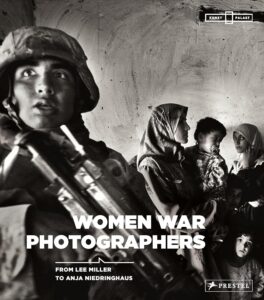 The work of Susan Meiselas was on display at the Women on the Front Line exhibition at the Fotomuseum in The Hague. During my visit, I was struck by the fact that the exhibition exclusively featured the work of female war photographers. Now that I am writing a separate blog post about each of the participating photographers, I am becoming increasingly aware of how diverse their backgrounds, approaches and motives are. This realization became even stronger while working on this text about Susan Meiselas.
Another Perspective on War Photography
I wondered why Susan Meiselas was included in this exhibition in particular, given that her work covers much more than just war photography. This prompted me to investigate how the curators interpreted her work. As I understand it, they view Susan Meiselas as a critical counterweight to the traditional image of the war photographer. She is less of a traditional reporter and more of a committed documentary maker. Susan Meiselas refuses to depict violence as a spectacle. Rather than photographing people, she photographs with people, showing how war affects the lives of those left behind. While many of her contemporaries stuck to black and white as the norm for serious war reporting, Susan Meiselas consciously chose color — a decision that highlights her involvement, proximity, and attention to everyday life.
Where does Susan Meiselas’s unique perspective originate?

To better understand how Susan Meiselas developed her approach, I looked for clues in her background. Where do you start? For me, the starting point was her education, not as a biographical detail, but as a key to her approach to photography and her relationships with her subjects.
Education

Susan Meiselas was born on 21 June 1948 in Baltimore, Maryland, USA. In 1970, she earned a Bachelor of Arts degree in anthropology from Sarah Lawrence College. She then completed a Master of Arts in Visual Education at Harvard University. There, she learned to use the camera as a tool for sociological and anthropological research, as well as for creating images. This education taught her to consider structures rather than just events. She became aware of her own position as a creator, of power relations, and of the implications of capturing other people’s lives. Crucially, she learned to ask herself questions before taking a photo, an approach that has remained evident in her subsequent work.
Surveyors and Surveyed — Derrick Price
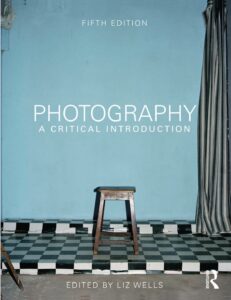
Because I want to understand Susan Meiselas not only through her images, but also through the thinking that precedes those images, I read the chapter Surveyors and Surveyed: Photography out and about by Derrick Price, included in Photography: A Critical Introduction (ed. Liz Wells).
Price argues that photography is never a neutral act. There is always a power relationship between the person looking — the surveyor — and the person being looked at — the subject. He also discusses ‘going out to photograph’, meaning that the photographer literally and figuratively enters someone else’s space. According to Price, it is also a misconception to think that documentary photography was once a simple and transparent practice which has only recently become more complex.

He refers to the French art critic, essayist and theorist, Régis Durand (Le document, ou le paradis perdu de l’authenticité, artpress, November 1999, included in: Disparités. Essais sur l’expérience photographique, 2002), who argues that the key question in documentary photography is always: what is actually being documented here? The supposed subject of the photograph is not only unstable, but its meaning also constantly shifts due to context, time and interpretation. Added to this is the crucial question of the subject — what is being captured and what happens during the creation of the image — as well as the question of how a photograph is ultimately received.
Returning to Susan Meiselas
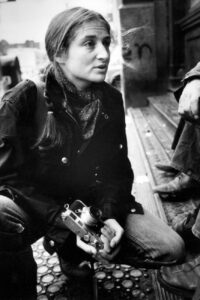 Susan Meiselas occupies a different position within war photography than many of her classic contemporaries. From her early years, she has consciously chosen a way of working that combines involvement, critical thinking and responsibility. A defining feature of her approach is her refusal to be satisfied with a single perspective. She investigates events from multiple sources and constantly questions official interpretations. At the same time, she adopts an approach of active listening and observation, being mindful of her own presence and influence, while ensuring that she does not reduce others to mere objects or victims. She constantly questions her own position, seeing herself not as someone who ‘takes’ images, but as someone who enters into a relationship. Susan Meiselas also recognizes the limitations of photography itself: images are never unambiguous or complete, nor do they convey absolute truth.
This is precisely why her work always transcends the individual photograph. Her projects consist of layers of images, text, context and collaboration, and they retain their meaning long after creation. They lose none of their power, but gain depth through repeated reading and reuse. Rather than focusing on a single ‘decisive moment’, the emphasis is placed on the gradual creation of a layered document that accurately portrays the intricacies of individuals and communities.
Susan Meiselas has been associated with Magnum Photos since 1976, becoming a full member in 1980. She is currently chair of the Magnum Foundation.
Transition to the projects
The rest of this blog I will discuss Susan Meiselas’s projects in chronological order. This is a long list, but necessary in order to do her work justice. It is precisely by following this sequence that we can see how consistent and thoughtful her approach is, and how her photography continues to resonate long after the moment the photo was taken.
44 Irving Street
 In 1970, Susan Meiselas, a student at the Harvard Graduate School of Education, photographed her neighbors in a boarding house at 44 Irving Street in Cambridge, Massachusetts. What began as a school project evolved into an empathetic portrayal of daily life in a shared living space. She actively involved her subjects by sharing contact sheets and inviting their responses. Through this project, Susan Meiselas established a working method in which photography is not a one-way process. By actively involving her subjects and placing their own words alongside the images, she created an early form of reciprocity and shared authorship — a working method that would continue to characterize her later work. The complete series was first published in book form in 2025.
Learn to See

While teaching in public schools, consulting for Polaroid and serving as a faculty member at the Center for Understanding Media in New York in 1975, Susan Meiselas developed Learn to See: a series of projects and methods for using Polaroid photography in education. In schools in South Carolina and Mississippi, she helped children to discover how photography could help them to visualize and understand their own identity and community. In doing so, she gave them a voice and visibility, opening up their perspectives.
In Learn to See, her approach emphatically shifted towards education, viewing photography not only as a medium for recording, but also as a tool for insight, self-representation and awareness. Consistent with this approach, she edited the 2021 publication Eyes Open: 23 Photography Projects for Curious Kids.
Carnival Strippers
After finishing her studies, Susan Meiselas moved to New York and began work on her first major project: Carnival Strippers (1972–1976). During the summer, when she was not teaching, she photographed women performing as strippers at small travelling fairs and carnivals in New England, Pennsylvania and South Carolina. She captured not only the performers, but also the men who attended the shows alone or in groups, revealing the social dynamics surrounding the performances.
 Susan Meiselas’s signature approach was evident here: she relinquished control, allowing the work to emerge from her encounters and relationships with her subjects. The women shared their motivations and dreams, and Susan Meiselas made audio recordings of their conversations, allowing the story to develop alongside them. This was not a voyeuristic project, but rather a personal document through which the women were able to regain their voice and dignity.
The project resulted in an exhibition at the Whitney Museum of American Art.
Prince Street Girls
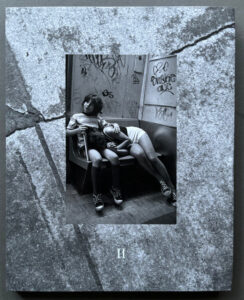 This project Prince Street Girls ran from 1975 to 1990, developing in parallel with Carnival Strippers. What began as a photo series about a group of young girls in New York’s Little Italy grew into a long-term project in which Susan Meiselas documented their transition from childhood to adolescence — a period of physical change, but also of growing social and cultural influence. In contrast, Carnival Strippers focuses on adult women whose bodies literally become part of a performance, transforming into entertainment within a male-dominated context. By working on these projects over a longer period of time, Susan Meiselas was able to demonstrate how people are shaped and how stories evolve.
Transition to Nicaragua
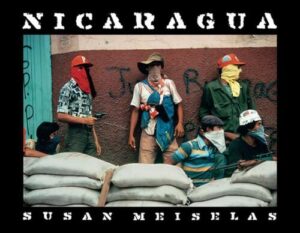 Susan Meiselas was in Nicaragua from June 1978 to July 1979. At the time, the country was torn apart by an explosive popular uprising against decades of dictatorship. One of the catalysts for this was the murder of newspaper publisher Pedro Joaquín Chamorro, which sparked massive protests. Susan Meiselas became fascinated by the question of how an entire population rises up in resistance, and by the psychology of a collective uprising.
In her work, she captured the final, violent phase of the revolution. She photographed not only fighters, but also ordinary citizens who took to the streets with homemade weapons and masks. Her most famous image, Molotov Man, shows a rebel on the eve of victory throwing a Molotov cocktail — made from a Pepsi bottle — at a National Guard garrison.
This image confronted Susan Meiselas with fundamental questions: what happens to a photograph once it leaves its context and begins to circulate? Who uses it and for what purpose? What responsibility does the photographer bear when their images become part of a political struggle? Photography was no longer merely a means of showing what was happening; it became an active instrument in newspapers, pamphlets, propaganda and, later, archives. This marked a turning point in her work, shifting her role from that of an observer to someone who inevitably became a player in the field of forces in which her images functioned.
In later years, Susan Meiselas deliberately expanded the scope of her Nicaragua project. By revisiting the country, compiling archives and recontextualizing her images, she revealed that the meaning of a photograph changes over time and with use and perspective. Anyone who interprets this project as heroic war reporting fails to grasp the essence of Susan Meiselas’s approach. Rather than confirming existing narratives, her work is about continuously reflecting on power, responsibility, and the ethics of representation.
Her photographs of the Nicaraguan Revolution also took on a life of their own within the country itself, being included in local schoolbooks and thus becoming part of the collective historical memory.
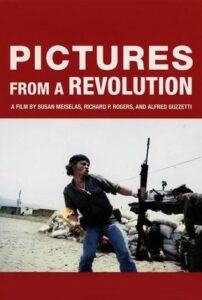 In 1991, Susan Meiselas returned to Nicaragua to make the film Pictures from a Revolution, in which she revisits the locations and people she had photographed ten years earlier and talks to them about the images.
Re-Framing History
This long-term project took on a new form in 2004, when she returned to the locations where her photographs were originally taken and installed nineteen wall-sized prints. Through this project, titled Re-Framing History, she brought the images back into the public sphere, confronting passers-by with their own history. Rather than presenting it as a fixed narrative, she offered a view that it can be viewed, questioned and rewritten repeatedly.
The reactions of passers-by, captured on video, form a third layer of this work. They reveal how images continue to circulate and how their meaning shifts over time. What was once documentation becomes memory, and what seems like memory becomes open to debate once more. This process was further explored in the 2006 Re-Framing History exhibition at the Bildmuseet at Umeå University in Sweden, where the return of the images themselves became a subject of reflection.
El Salvador: The Work of Thirty Photographers – Photography as Evidence
In 1978, Susan Meiselas travelled to El Salvador, where an extremely violent civil war was raging. The country was plagued by disappearances, death squads and systematic terror against the civilian population. Susan Meiselas photographed bodies left by the roadside as a deterrent — visible traces of violence intended to instill fear and enforce control. She also aimed to demonstrate how US military support for the Salvadoran regime was directly contributing to large-scale human rights violations.
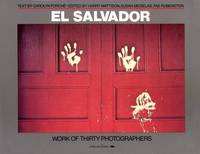 In El Salvador, the function of photography fundamentally changed. Images became forensic evidence, a means of documenting and verifying crimes. Susan Meiselas was one of the few journalists to reach the village of El Mozote shortly after the Salvadoran army murdered approximately 800 civilians there in 1981. Her photographs of burned bodies, skulls and destroyed houses, published in The New York Times, refuted official denials by both the Salvadoran government and the United States.
Ten years later, these images were granted formal legal status. The United Nations Truth Commission for El Salvador used them as part of its investigation into war crimes. Alongside survivor testimonies, Susan Meiselas’s photographs contributed to the official report that held the Salvadoran army responsible for large-scale human rights violations. Even decades later, the images remained relevant; in 2021, her photographs of El Mozote were used again in court cases in El Salvador to substantiate the involvement of military advisers in violence against civilians.
By compiling her work in El Salvador: The Work of Thirty Photographers Susan Meiselas also contributed to a political debate outside the conflict zone itself. The visual evidence forced the US Congress to discuss the legitimacy of providing military support to the regime, as the atrocities could no longer be denied or considered abstract.
In this video, she discusses her experiences of the violent civil wars in Nicaragua and El Salvador, as well as the shocking and disturbing stories behind some of the gruesome images she captured. She also discusses the broader ethical and responsible considerations for photographers documenting history.
Chile from Within
 For this project in 1990, Susan Meiselas edited the work of a group of Chilean photographers who had spent years documenting the Augusto Pinochet dictatorship, often anonymously and at great risk. The resulting book is a visual archive of the period from the violent coup d’état in 1973 to Pinochet’s eventual fall in 1988. The work of fifteen photographers not only shows the repression, but also the resilience of the population and the power of street protests. Accompanying essays by renowned Chilean authors contextualize the images within a broader cultural and emotional framework, rendering the collection both a historical record and a meditation on courage, resistance, and collective memory.
Kurdistan: In the Shadow of History
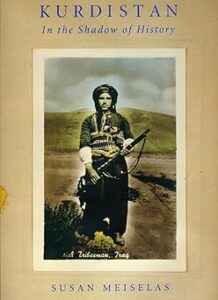 Susan Meiselas first travelled to Kurdistan in 1991, shortly after the First Gulf War. Her aim was to document the aftermath of the Anfal campaign — the genocide carried out by Saddam Hussein’s regime against the Kurdish population — and the ensuing mass refugee crisis. She soon realized that she was confronted not only with destruction and loss, but also with a fundamental problem: a stateless people often have no archive of their own.
In response, she created a layered visual archive combining different types of images, rather than a traditional photographic project. Her color photographs of destroyed villages and mass grave excavations were combined with historical images taken by Western anthropologists, missionaries and soldiers who had photographed Kurds over the previous century. Most remarkably, Susan Meiselas actively invited Kurdish families to share their private photographs and personal stories. Often, she photographed these family portraits while the owners were holding them, thus making the image a tangible object of memory as well as a representation. In this way, the photograph functions as an image, evidence and carrier of personal history simultaneously.
Throughout the 1990s, Susan Meiselas regularly returned to Kurdistan, expanding the project further each time. With the digital platform akaKURDISTAN, she explicitly returned control of the narrative to the community itself. The archive thus became an open structure in which memory, history and ownership converge, rather than a closed project.
The book Kurdistan: In the Shadow of History was first published in 1997 and reissued in 2008. Considered one of the most important photo books of the late twentieth century, it is renowned not only for its iconic images, but also for its radical redefinition of the potential of photography. Also this project demonstrates how Susan Meiselas uses photography as a tool for recognition, healing and long-term justice, not by presenting a single narrative, but by providing a platform for multiple voices.
Pandora’s Box
 In Pandora’s Box, Susan Meiselas explores an exclusive sadomasochism (SM) club in Manhattan, New York. She gained access to this private world around 1995, when complex rituals and power relations played a central role. This project is often considered a spiritual sequel to her pioneering work, Carnival Strippers. Despite the twenty-year gap between the two projects, the thematic and methodological similarities are striking.
In Pandora’s Box, clients — primarily men — willingly submit to controlled acts of violence and submission, enacted by female mistresses. Power is not simply assumed here, but is explicitly agreed upon, directed and enacted. Susan Meiselas photographed not only the club’s thematic spaces, such as the dungeon and the medical room, but also combined these images with interviews and testimonials from the mistresses, the manager and the clients themselves. This creates a layered narrative in which images and voices complement each other.
Published in 2001/2002, the book Pandora’s Box is exceptional in its form, with materials such as latex and rubber physically referencing the atmosphere of the club.
Encounters with the Dani
 In this 2003 project, Susan Meiselas examines how the Dani people of the Baliem Valley in West Papua have been portrayed by outsiders over the decades. Susan Meiselas’s involvement began in 1988 when she accompanied anthropologist Robert Gardner on his return to the valley, twenty-seven years after he had made the influential film Dead Birds there.
Rather than developing into a traditional photo reportage, the project evolved into a layered visual history spanning more than sixty years of encounters. Susan Meiselas collected images and texts from a variety of sources, including missionaries, anthropologists, colonial officials, military personnel, tourists and local police. She also used diaries, letters, advertisements and even a comic strip about the discovery of the Dani. In this way, the project spans the period from the first Western contact in 1938 to the start of Susan Meiselas’s own research in 2003.
Rather than presenting a single dominant narrative, Susan Meiselas used her camera and the archive to reveal how collective memory is constructed: as something fragmentary, contradictory and influenced by power. By juxtaposing images and revealing their context, she challenges the imperial gaze, demonstrating that the history of a people is often comprised of overlapping and conflicting perspectives rather than a single, coherent narrative. Susan Meiselas again refuses to pass moral judgement. Instead, she reveals how power, desire and representation function within a carefully defined context. By observing and listening rather than judging, she encourages viewers to form their own opinions — and that is precisely where the project’s power lies.
Cova da Moura
Cova da Moura is a vibrant Cape Verdean community on the outskirts of Lisbon. In 2004, Susan Meiselas saw a flyer inviting outsiders to visit the community and was intrigued. Rather than positioning herself as an outsider, she took a more thoughtful approach. She introduced herself to residents using Polaroid photos: small, tangible images that she signed and returned to those portrayed. The gesture was simple yet meaningful. It broke through the one-sidedness of photography, making room for reciprocity, permission and trust. In this way, taking a picture became the beginning of a conversation, not an intrusion.
To bridge the gap between the community and the formal art world, Susan Meiselas organized workshops for local teenagers and gave them digital compact cameras. When it became apparent that many residents did not feel connected to the museums in central Lisbon, she and the young people moved the exhibition to the neighborhood itself. Portraits and personal photographs were displayed directly on walls and in the streets. The images depict intimate everyday scenes: family gatherings, children playing and night-time vigils. Above all, however, they reveal a strong sense of identity and resilience.
Next
The following section highlights seven projects, each of which illustrates an aspect of Susan Meiselas’ s methodology and approach. Examining these projects reveals that Susan Meiselas’s work is an ongoing process of observation, dialogue, and reflection.
In History: An Overview of Vision and Method
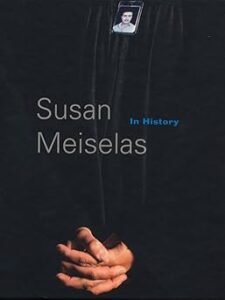 Following a series of individual projects, In History (2008) does not present any new photographic work. Instead, it provides a comprehensive overview that reveals the essence of Susan Meiselas’s vision. The book provides an in-depth analysis of how she has questioned and recalibrated her role as a photographer over the decades. It reveals how her principles of engagement, critical thinking and shared authorship consistently recur in all her work, regardless of subject or context. What strikes me most about In History is that Susan Meiselas almost dissects her own practice. She identifies the strategies and concepts that underpin her work.
 For instance, she discusses Visual Archaeology, which involves unearthing and bringing together hidden or forgotten histories. This is achieved not only by creating new images, but also by reinterpreting archives and contextualizing existing images — as she did in Kurdistan and with the Dani. In The Afterlife of Images, she considers what happens to a photograph after it is published. An image lives on, being reproduced, appropriated and used in political or media contexts. The creator’s control shifts — sometimes completely. In her concept of the Collaborative Documentarian, the subject of the portrait is not an object, but a co-owner of the story. The relationship between photographer and subject is thus reciprocal rather than hierarchical. Counter History is about making alternative narratives visible — stories missing from official government or media reports. With Long-Term Engagement, she highlights her ongoing commitment to subjects and communities. Returning is not repetition, but deepening. Through Mediated Memory, she reflects on how images shape and reshape our collective memory, and on how photography not only records but also constructs meaning.
The book is structured both chronologically and thematically, and features contributions from renowned critics and curators. However, what truly sets it apart is that it doesn’t just look back; it questions.
A Room of Their Own (2017) – Archives of Abuse (1991-1992)
 In her project A Room of Their Own, Susan Meiselas documents the lives of women in domestic violence shelters in the Black Country, West Midlands, UK. Rather than focusing on the moment of violence itself, the project explores what comes after: the transition, vulnerability, and gradual reconstruction of a safe existence.
The book contains Susan Meiselas’s photographs, as well as the women’s testimonies, poems and artworks created during workshops. This shifts the authorship once again, as the women become co-narrators of their own stories rather than mere subjects. To protect their privacy and safety, Susan Meiselas rarely shows faces in her photographs. Instead, she photographs rooms and personal objects — silent traces of presence. The empty space becomes a carrier of meaning. A room can represent either a new beginning or the loss of a previous life.
It is precisely this restraint that reveals her ethics. By depicting absence rather than recognizability, she respects the women’s safety and emphasizes that identity encompasses more than just a face. The project demonstrates how memory, trauma, and recovery are embedded in spaces and objects and how photography can lend a voice to silent narratives.
A Room of Their Own is not a standalone project. It builds on Archives of Abuse (1991–1992), a project developed by Susan Meiselas in San Francisco in response to a commission from the Liz Claiborne Foundation. For this project, she collaborated with the police, using existing reports and photographs from crime scenes as public evidence of violence. These were displayed in bus shelters to bring the subject out of the private sphere and into the public domain. However, her approach for A Room of Their Own in 2017 shifted significantly. Rather than focusing on external evidence, she now focuses on the internal space of recovery and the voices of the women themselves. Thus, a development emerges in her work: a shift from making violence visible to making agency and reconstruction visible.
On the Front Line
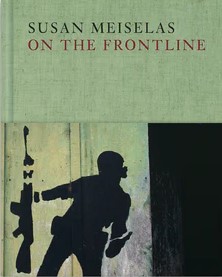 On the Front Line (2017) is less a new project than a form of self-examination, built around conversations with editor Mark Holborn. In these interviews, Susan Meiselas reflects on her career, explaining the reasons behind her decisions. She reflects on collaboration, returning to conflict zones and the lasting impact of her images.
The conversations cover her most iconic projects, such as the Sandinista revolution in Nicaragua, the civil war in El Salvador and her investigation into Kurdish history, but also shed new light on her earliest work. What emerges is not just her body of work, but also her ongoing reconsideration of her role as a photographer: as a witness, a participant and a mediator.
Mediations: Reflection and Mediation
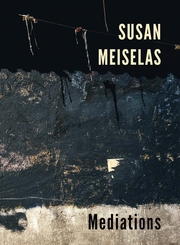 In 2018, Susan Meiselas presented her Mediations exhibition at FOMU in Antwerp, C/O Berlin and Jeau de Paume in Paris. The exhibition provided an overview of her five-decade career, with a focus on her work in conflict zones, her engagement with marginalized communities, and her collaborative approach to documentary photography. Having already discussed the individual projects from this exhibition above, here I will focus on the overarching vision that becomes apparent in Mediations.
Mediations vividly illustrates Susan Meiselas’s working process. Acting as a ‘mediating photographer’, she often revisits earlier projects, such as her Nicaragua series from 1978 to 2004, exploring how images evolve in meaning over time and within different contexts. Her iconic photograph, ‘Molotov Man’, exemplifies the interplay of ethics and symbolism, demonstrating how an image can become divorced from its original context and assume a new identity, prompting reflections on ownership and representation. Collaboration is another central aspect of her working method. She actively involves her subjects in researching and re-presenting their stories, as in the akaKURDISTAN project, thereby making them co-owners of their narrative. At the same time, she reflects on her earlier work, such as 44 Irving Street, in which her presence is subtle yet palpable. She is a photographer who bears witness without dominating, guided by where she wants to be, where she wants to stay, and where she wants to return. This demonstrates the consistency of her principles over the decades.
Additionally, Mediations once again demonstrates how Susan Meiselas extends beyond the realm of the still image. She combines photography with video, sound and installations to create narratives and expose the frequently imbalanced power dynamics between photographer and subject. During the masterclass and video interviews at Jeu de Paume, she emphasized that this ongoing process of engagement and revision is integral to her work. The result is a retrospective that presents not only her images, but also offers insight into how Susan Meiselas’s photography developed continuously. In this video, Susan Meiselas reflects on her career as a photographer, as well as on her role as a witness.
Tar Beach: Life on the Rooftops of Little Italy
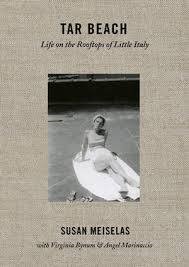 In Tar Beach (2020), Susan Meiselas’s role shifts once again. Here, Susan Meiselas acts not as a photographer, but as a curator and collector of images. The project uses family photos collected with local residents to reconstruct daily life in New York’s Little Italy neighborhood between 1920 and 1975. Weddings, communions, birthdays and everyday moments come together to form a collective portrait of a community in transition.
The book charts the gradual shift from Italian immigrant culture to American-Italian identity over several generations. The title Tar Beach refers to the tar-covered rooftops of apartment buildings, which many families used as a refuge — an improvised ‘beach’ above the hustle and bustle of the city.
Martin Scorsese, who grew up in Little Italy, wrote the introduction. He describes the rooftops as a sanctuary — a place to dream above the chaos of Manhattan — a metaphor that also characterizes the project itself: a space where memories are preserved and given new meaning.
In this video Susan Meiselas discusses Tar Beach: Life on the Rooftops of Little Italy.
Eyes Open: 23 Photography Projects for Curious Kids

Following on from Learn to See (published in 1975), Susan Meiselas edited Eyes Open (published in 2021), an interactive guide full of photography ideas and assignments designed to inspire children to discover the world around them through the lens of a camera. Aimed at aspiring photographers aged 8 to 12, the book contains 23 playful yet meaningful projects. The assignments stimulate a process of discovery, encouraging children to find new ways to tell stories with images. Each project is illustrated with photos taken by young people and professional photographers from around the world. In this way, the book demonstrates how a simple idea can evolve into a rich and creative narrative.
Collaboration: A Potential History of Photography
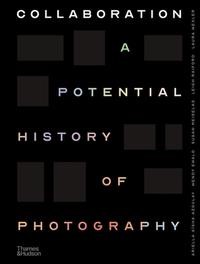 In 2024, the ambitious and academic work Collaboration: A Potential History of Photography was published. This ambitious academic work was written by Susan Meiselas and co-authors Ariella Aïsha Azoulay and Wendy Ewald. The book challenges the traditional historiography of photography, which often tells the story of the ‘individual genius photographer’. Instead, Collaboration: A Potential History of Photography emphasizes that every photograph is the product of collaboration between the photographer, their subject and, ultimately, the viewer.
Featuring over 600 photographs and 100 projects, the book explores the various forms collaboration can take, ranging from friendly and democratic to coercive and violent, as exemplified in colonial photography. By combining these diverse examples, the book reveals how power, control and authority manifest themselves in imagery.
The book serves as both an overview and an educational tool. It encourages readers to critically examine who holds power in an image, how that power is exercised, and which narratives are conveyed or omitted. In this way, Collaboration: A Potential History of Photography offers a fresh perspective on the creation of photographs and the shaping of stories through collaboration and power relations.
In this interview with Wendy Ewald and Susan Meiselas for the British Journal of Photography, the photographers explain their intentions behind the book.
Current events
 Susan Meiselas’s list of reviews, awards and exhibitions is impressive and too extensive to discuss in full here. What is striking, however, is that her work has historical significance and is still evolving today. Evidence of this can be seen in her recent publications, including the profile book recently released in the Photofile series, which reexamines her body of work and makes it accessible to a wide audience. It can also be seen in current exhibitions, in which her images are once again brought into dialogue with the present day. A powerful example of this is the Crossings exhibition, which brings together work from different periods and highlights the urgency of her themes once again.
Crossings – Photographic Center Northwest (15 January – 22 March 2026)
The Crossings exhibition brings together different periods of Susan Meiselas’s work, revealing recurring themes over several decades. First presented in Chicago in 1990, it combines documentary photographs of Central America, including Nicaragua and El Salvador in the 1970s and 1980s, with panoramic images of the US Mexico Border taken in 1989. For this updated version, a new installation featuring border images from 2018 has been added. By juxtaposing these layers of time, the exhibition offers a poignant reflection on migration in relation to economic and political crises. What was urgent then appears to be so again today. The expansion of border surveillance and the militarization of border control, coupled with polarizing political rhetoric, make the images confrontational and topical.
The exhibition invites visitors to take a closer look, recognizing recurring patterns and embracing a shared humanity. Rather than reducing migration to a political debate, it is presented here as a universal search for safety, opportunities and a better life — a movement that transcends generations and borders.
Recognition and awards
The enduring relevance of Susan Meiselas’s work is evident from the numerous awards she has received over the years. In 1979, she was awarded the Robert Capa Gold Medal, which honors courageous and committed photojournalism. In 1992, she was named a MacArthur Fellow in recognition of her exceptional creativity and social significance.
In 2006, she received the Royal Photographic Society Centenary Medal and an Honorary Fellowship for her lasting contribution to photography. More recently, in 2019, her work was honored with the Deutsche Börse Photography Foundation Prize, which recognizes photographers who innovate the medium in meaningful ways.

She was recently honored internationally once again with the Outstanding Contribution Award at the 2025 Sony World Photography Awards, an accolade that highlights her long-standing and influential contribution to photography. This succession of awards marks an impressive career and confirms that her work, rooted in engagement, collaboration and ethical reflection, continues to appeal to successive generations.
Conclusion
Time and again, it becomes apparent in all these projects, publications and exhibitions that Susan Meiselas’s work cannot be confined to documentary photography. She moves between conflict zones and communities, archives and exhibition spaces, memory and current experience — always with the same fundamental attitude: engagement. Her work is not only about what becomes visible, but also about who is seen and under what conditions. In an interview with Phong Bui in The Brooklyn Rail (2008), she aptly expresses what drives her:
‘I don’t want to relinquish the role and the necessity of witnessing and the photographic act as a response, a responsible response. But I also don’t want to assume in a kind of naïve way … that the act of the making of the image is enough. What’s enough? And what can we know in this process of making, publishing, reproducing, exposing, and recontextualizing work in book or exhibition form? … I can only hope that it registers a number of questions.’
These words encapsulate the essence of her work. Her images are encounters, not endpoints. They reveal relationships — between photographer and subject, past and present, image and responsibility — as well as showing events. At a time when images spread rapidly and often become detached from their context, she continues to question power, representation and ownership. Her work demonstrates that photography can listen, return, restore and connect, as well as record.
While writing this blog, I immersed myself in the work of Susan Meiselas and was deeply impressed by her integrity, compassion, and unwavering dedication to empowering the voiceless, oppressed, and marginalized.
Johanna, 14 March 2026
