Women photographers – Women at the Front Line
Revolutionaires
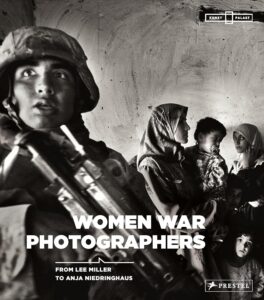 In my previous blog, I wrote that I would discuss Lee Miller and Catherine Leroy, two female war photographers whose photos were on display at the ‘Women at the Front Line’ exhibition. As they were active in different periods and parts of the world, I have decided to write a separate blog post about each of them.
Both photographers are associated with the ‘Revolutionaries’ period of the early 20th century, when female photographers used the camera to fight for various causes — from anti-fascism to feminism — thus shaping socially engaged photography. The ‘Women at the Front Line’ exhibition focused on photographs originally taken for newspapers and magazines. Both photographers made an important contribution to war reporting. This is precisely why it is important to revisit and contextualize their work.
Career
Lee Miller (1907–1977) had already enjoyed a successful career as a model and fashion photographer by the time she started reporting as a war photographer during World War II. Her earlier experience, including her sense of image and composition, is clearly evident in her photographs of the war’s horrors. This is the focus of this blog.
 She was born into a wealthy, middle-class family in New York State. Her father, an enthusiastic amateur photographer, introduced her to photography at an early age, teaching her the technical and creative aspects. In the 1920s, she worked as a model for the influential publishing house Condé Nast, which is behind titles such as Vogue and Vanity Fair. This period in the fashion world shaped her artistic vision and gave her the opportunity to become a photographer herself.
Paris – Man Ray
 In 1929, Lee Miller left for Paris with the aim of becoming a photographer. She became Man Ray’s assistant, muse and lover, learning the technical tricks of the trade from him and coming into contact with the Surrealist art world.
Man Ray was a key figure in the movement, best known for his experimental photography and photograms. His work explores dreams, chance and the unconscious, which are all characteristics of the Surrealist movement. By photographing everyday objects in unexpected ways, he challenged conventional perception and made the invisible visible.
Miller also began experimenting with Surrealist subjects and photographic techniques, quickly developing her own style characterized by strong compositions and well-timed moments. Alongside her artistic work, she undertook commercial assignments and regularly worked in the French Vogue studio, where she learned a great deal about studio photography and lighting. In 1930, her photographs were published in Vogue for the first time.
New York
 In 1932, Lee Miller ended her relationship with Man Ray. In response, he created the artwork ‘Object of Destruction’, which consisted of a metronome with a photograph of Lee’s eye attached to it. She then moved back to New York, where she opened her commercial studio. At that time, few photographers could earn a living from independent projects, so she also accepted commissions. She did fashion photography for Vogue and its competitor, Harper’s Bazaar. As in Paris, her artistic and commercial work merged, and she experimented increasingly with photographic techniques.
Egypt
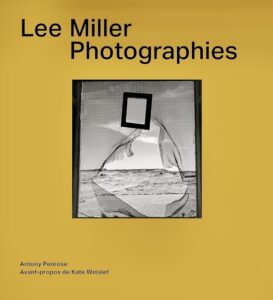 Unexpectedly, she closed her studio in 1934 and married a wealthy Egyptian businessman. From then on, she lived in Cairo, seeking adventure in the desert and capturing the vast landscape and Egyptian life in her photography.
Back to Paris and from there to London
 In 1937, she returned to Paris, where she met the British artist Roland Penrose. He was a Surrealist painter, writer and collector, and they began a romance.
In 1939, Lee Miller went to London with Roland Penrose. The city was barely recognizable due to the Blitz, the German bombing campaign.
Every day, Miller traversed the devastated city, armed with her camera and rolls of film. Her photographs focused on everyday objects lying among the rubble and ruins. 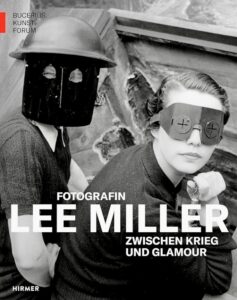
At the same time, she began working as a photographer for British Vogue, which was becoming an increasingly important platform for war propaganda. The magazine collaborated closely with the Ministry of Information and was led by chief editor Audrey Withers.
Many articles highlighted the role of women in the war and how they could remain stylish.
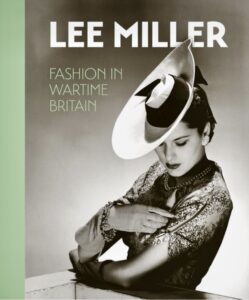 Despite the war, Lee Miller managed to take attractive fashion photographs with a subtle use of light and shadow. However, she was not satisfied; she wanted to make a greater, more impactful contribution. She applied for press accreditation and began writing her own captions for her photos. In 1941, regular power outages caused Vogue to change its approach: fashion photos were no longer taken only in studios, but also on the street. In bombed-out London, Lee Miller played with the contrast between beauty and destruction while capturing a unique snapshot of the times.
Campaigns
During the war, Lee Miller produced reports for several significant government campaigns. For instance, she took photographs of advertising campaigns promoting shorter hairstyles to make it safer for women to work in factories, as well as a series about a clothing program encouraging women to continue dressing elegantly despite reduced incomes. In collaboration with the Ministry of Information, Vogue published articles about prominent women involved in the war effort to inspire others. For these articles, Lee Miller photographed Martha Gellhorn and Margaret Bourke-White, among others — women who produced incisive reports and attended pivotal events during the World War II.

Martha Gellhorn, an American novelist and travel journalist, was one of the greatest war correspondents of the 20th century. During her sixty-year career, she reported on virtually every major global conflict. The Martha Gellhorn Prize for Journalism is named after her.
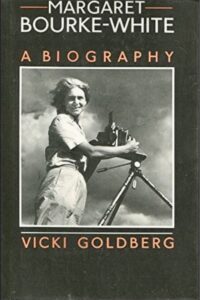 Margaret Bourke-White, was an American photographer and the first female war correspondent for the US Army, serving as a lieutenant colonel. Towards the end of World War II, she worked for the US Air Force. One of her most famous works is the iconic photograph ‘The Living Dead of Buchenwald’.
Lee Miller’s first story as a war correspondent focused on the nurses of the US Army. After initially struggling with the accompanying text, the article was eventually published in British Vogue in 1943.
Collaboration with David E. Scherman
 While working in London for Life magazine, Lee Miller shared an apartment with David E. Scherman and Roland Penrose. This period marked the beginning of their close personal and professional collaboration. He is often credited with encouraging her to apply for press accreditation as a war correspondent with Vogue. Together, they photographed the Auxiliary Territorial Service, the female branch of the British Army responsible for operating searchlights in support of air defence. Their photos appeared in both American and British Vogue, showcasing women’s active contribution to the war effort.
Lee Miller on the front line in France
 From December 1942 onwards, Lee Miller was officially a war correspondent for Condé Nast. Six weeks after D-Day, the day the Allies stormed the Normandy coast to liberate France from German occupation, she and David Scherman arrived in Normandy. As one of the first female correspondents, she photographed a field hospital for British and American Vogue, among other things. A few months later, she travelled to France again to capture daily life in Saint-Malo. However, she discovered that the fighting was still in full swing, suddenly finding herself on the front line.
Paris after Liberation
In August 1944, Miller captured the joyous scenes in the streets of liberated Paris. She noticed how well-groomed many of the women were, and this turned out to be a silent act of resistance against the German occupiers. The Parisiennes incorporated as many materials as possible into their clothing to prevent the Germans from acquiring them. Her photos and articles, which captured the resilience and creativity of Parisian women during World War II, appeared in Vogue and Cadran.
Eyewitness in Germany
Lee Miller and David Scherman accompanied the advancing American army through Germany. In April 1945, Allied troops discovered the concentration and extermination camps. For many people, it is only now that the full extent and systematic nature of the genocide of Jews, Roma and Sinti becomes clear. Lee Miller and David Scherman, together with a handful of politicians and journalists, were granted access to the recently liberated camps. Nothing could have prepared them for what they saw in Dachau and Buchenwald.
Should these images be published?
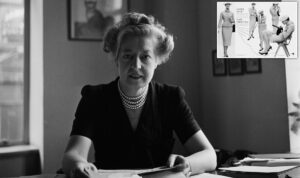 ‘I beg you to believe that this is true,’ wrote Lee Miller to Audrey Withers. While realizing that these atrocities must be shared, news and magazine editors struggled with the question of whether and how these poignant images could be published. Ultimately, US Vogue decided to print the reports. In contrast, British Vogue published only one small photo of the Holocaust, and after the war, Audrey Withers chooses to share mainly images of victory and recovery with her readers.
Anger and horror
Lee Miller’s reports were imbued with anger and horror. Many of her friends were Jewish, which gave her reports a personal dimension and revealed her emotional response to the events. American soldiers discovered trains filled with the skeletal, exhausted bodies of Jewish prisoners and other victims who died ‘en route’ to concentration camps. ‘I don’t usually photograph atrocities,’ Lee Miller wrote to the editors of Vogue, ‘but I feel it is important to provide photographic evidence of these horrors.’
After Dachau
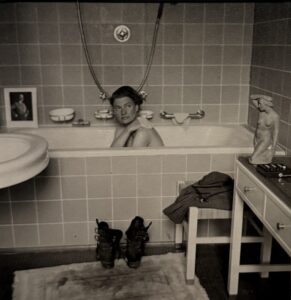 On 30 April 1945, Lee Miller and David Scherman arrived at Hitler’s former apartment, which American soldiers were using as a command post. Having been on the road for weeks without access to hot water, they decided to take a bath and captured this bizarre moment on camera. To emphasize that it is Hitler’s bath, they placed a portrait of him on the edge. While they were there, they received news that Hitler had taken his own life in Berlin. This photo of Lee Miller in Hitler’s bath, taken by David Scherman, has since become one of the most iconic images of their collaboration.
The aftermath in Europe
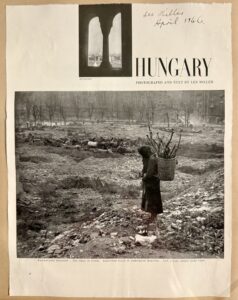 By the autumn of 1945, the war had ended, but its consequences were still being felt long afterwards. Cities lay in ruins and citizens struggled to rebuild their lives. The prospect of returning to normal life kept Lee Miller awake at night, so she decided to document the aftermath of the war. She travelled to Eastern Europe, visiting Salzburg and Vienna in Austria — cities that had been completely destroyed. In January 1946, she travelled to Hungary and Romania, where she submitted her final photos and articles as a war correspondent.
Celebrity
Upon her return to England, Lee Miller was welcomed as a celebrity. However, she was deeply unhappy, unable to forget what she had seen. She was completely exhausted. At the time, little attention was paid to mental health or coping with traumatic experiences. She suffered from severe depression.
Life after the war
After the war, Lee Miller and Roland Penrose divided their time between London and their country residence, Farley Farm. The house became a refuge for Surrealism, Modernism, and European culture, and friends from the worlds of art, literature, journalism, and academia regularly visited.
In 1947, Roland Penrose co-founded the Institute of Contemporary Arts (ICA) in London. As a Surrealist artist, collector and promoter of modern art, he organized the institute’s first two major exhibitions, thereby establishing the ICA’s role in presenting contemporary art in Britain.
Meanwhile, Lee Miller had to choose between motherhood and her career as a professional photographer. The birth of her only child, Anthony, in 1947, marked the end of her travels and her career as a professional photographer.
Cooking
 In the late 1950s, Lee Miller attended the École Culinaire de Paris, becoming a leading culinary writer for Vogue in 1953. She amassed a library of over 2,000 cookery books, won awards for her dishes and was recognized as an authority on cookery.
David Scherman claimed that cooking saved Lee Miller’s life.
Legacy
When asked about her early work, Lee Miller said that her photographs had been lost, and she was often evasive about her past. However, after her death, her son discovered many of her photographs from the war years, enabling her work to be published and her contribution to the history of photography to be recognized. Thanks to Anthony Penrose’s efforts, her work has been brought back into the spotlight.
Perhaps it will come as no surprise that I am deeply fascinated by Lee Miller. What makes her so special is that she was driven by her creative spirit to constantly challenge herself, push boundaries, discover new things and, when circumstances demanded it, use her talents to open our eyes to the human suffering caused by war. Countless courageous journalists and photographers continue to do this tirelessly to this day.
Books, website, film, exhibition about Lee Miller
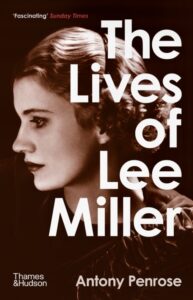 The Lives of Lee Miller, 1985, 1988 and 2021, Anthony Penrose ISBN 978 05002975 20
Surrealist Lee Miller, Lee Miller Archives, 2009, Anthony Penrose ISBN 978 0 953289 34
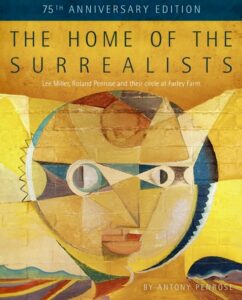 The Home of the Surrealists: Lee Miller, Roland Penrose and their circle at Farley Farm, 2016, Anthony Penrose ISBN 978 0 9532389 10
Lee Miller: A Life with Food,Friends and Recipes, 2025, Ami Bouhassane ISBN 97819142980 28
Website: Lee Miller
Film: In 2023, the film Lee, directed by Ellen Kuras, was released. Here is the trailer of the film.
Exhibition: The FOMU in Antwerp, Belgium, hosted an exhibition entitled ‘Lee Miller in print’.
Silent Gaze
In conclusion, while writing this blog, I was once again deeply moved by Lee Miller’s life. It made me realize once again how suddenly a life can change completely. Her world was turned upside down by World War II, changing her creative, cultural and rich existence among artists, journalists and writers. Yet she chose to use her talent as a photographer to give a voice to the voiceless victims of the war. I have a deep admiration for her perseverance and empathy. Her photos touch me every time because they reveal the vulnerability and strength of human beings, and remind me of the power of creativity in times of chaos and grief.
Johanna, 5 December 2025
