
Question
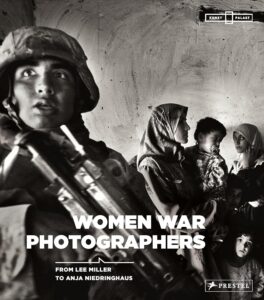

What exactly is the difference between documentary photography and photojournalism—what sets these two apart? Traditionally, that distinction did exist. However, this distinction is historically determined and not absolute. Classic photojournalism was tied to news and current events. It operates within media such as newspapers and magazines, in collaboration with editorial teams and according to journalistic rules. Speed and publication are central.
Documentary photography, on the other hand, is often slower and more in-depth. There is room for interpretation and context, and the photographer is usually involved for a longer period of time. This work is less dependent on news media. Over time, however, that distinction has shifted. Whereas there used to be clearer categories, they are now increasingly overlapping. Photographers work in multiple ways simultaneously, labels are used more loosely, and new forms are emerging. The terms ‘photojournalism’ and ‘documentary photography’ still exist, but their boundaries are less clearly defined.
The system through which images circulate has also changed. The linear process of photographer → editor → publication → audience barely exists anymore. Anyone can take and publish photos; social media function as news platforms, and the audience has simultaneously become a creator. This affects photojournalism in particular. Control and selection are diminishing, speed is becoming more important, and professional standards are coming under pressure. Added to this is the rise of the ‘citizen photographer’: people without a journalistic background who capture events and share them directly online. Their images are often perceived as more authentic. At the same time, financial constraints and limited access to conflict zones are forcing media outlets to rely more frequently on this type of imagery. This is radically changing the role of the professional photographer.
The difference between documentary photography and photojournalism thus lies less in the image itself and increasingly in the context in which it is created, distributed, and interpreted. With that in mind, it becomes interesting to examine the path Carolyn Cole has taken. How has her perspective been shaped? Where does her story begin, and how does her work develop within—and perhaps also beyond—the boundaries of photojournalism?
How It All Began
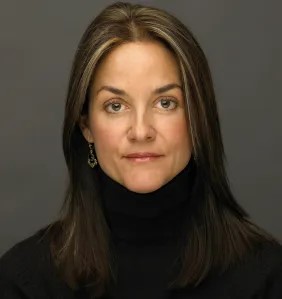

After high school, she received a Pentax K1000, which she took with her on a summer trip through Europe. That camera changed her place in the world. Where words sometimes failed, photography offered a different form of connection. It allowed her to get closer to people, despite her shyness and without speaking the language. It was her first experience of what photography could do: bridge the distance.
Not long after, she decided to pursue that path further and graduated in 1983 from the University of Texas with a Bachelor of Arts, majoring in photojournalism, and subsequently earned a Master of Arts from the School of Visual Communication at the Scripps College of Communication at Ohio University.
Professional Career
After completing her studies, Carolyn Cole began working as a photojournalist for publications including the El Paso Herald-Post, the San Francisco Examiner, and the Sacramento Bee. She also worked as a freelance photographer in Mexico City for newspapers such as the Los Angeles Times, the Detroit Free Press, and Business Week. During this period, she further developed her visual perspective and learned to work in diverse and often unpredictable conditions.


Recognition and visibility
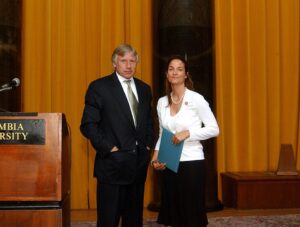
Carolyn Cole first gained widespread recognition in 1994, the year she joined the Los Angeles Times. She received the newspaper’s editorial award for her photographs of the crisis in Haiti. A year later, she was honored again, this time for her work in Russia.
From Conflict to Disaster


Her photos told a story that words could not convey and contributed to the Los Angeles Times’ Pulitzer Prize for reporting. That year, Carolyn Cole was named Journalist of the Year by the Times Mirror Corporation.
In 1999, she was in Kosovo during the crisis, and in 2001, she spent two months in Afghanistan.
Bethlehem, 2002
In early April 2002, Israeli troops surrounded the city of Bethlehem during Operation Defensive Shield. Palestinian militants, civilians, and police officers sought refuge in the Church of the Nativity, a sealed-off enclave of tension and fear that held out for 39 days.


Liberia and Iraq, 2003–2004
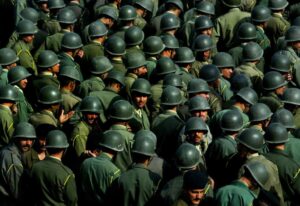

In this short interview, she discusses one of the photos she took in Iraq and its impact as a symbol of the mistreatment of prisoners of war by the U.S. military.

Natural Disasters and Environmental Crises
After her intensive work in conflict zones, Carolyn Cole turned her attention to natural disasters and environmental crises, maintaining her characteristic commitment and eye for human stories.
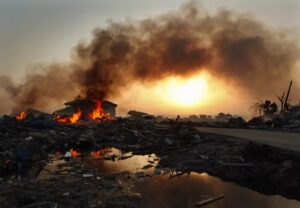

She not only highlighted the physical damage but also emphasized the personal suffering: grieving families, chaotic conditions in emergency hospitals, and life in refugee camps. In addition, she visited other affected regions in South Asia to illustrate the scale of the disaster—which affected more than a dozen countries.


Her photography captured the scale and severity of the disaster: from oil-covered beaches and marine life to fishermen and coastal communities watching their livelihoods disappear. Often, the places where you can take the most important photos are where the authorities don’t want you to be and where they don’t want to be seen. That was also true of this oil spill, where the areas where the oil washed ashore had been cordoned off by the police. Because the disaster had occurred more than 80 kilometers offshore, it was difficult to get there. One photo of an oil-soaked pelican affected Carolyn Cole so deeply that she has since focused more frequently on environmental issues.
Behind the Scenes – Pioneering and Process
In addition to the visible events and iconic photos, Carolyn Cole herself recounts the challenges behind the camera. In a recent interview, she described how often improvisation was necessary: equipment didn’t always work as planned, conditions were extreme, and she had to learn to make quick decisions.




In the mid-1990s, Carolyn Cole wanted to be one of the first photographers to use a digital camera. These early digital hybrids from Nikon and Kodak were enormous, heavy, and cumbersome: ‘They were gigantic, very large, and hard to hold, which made your wrist hurt. The batteries were weak and the memory cards were small. Each photo was about one megapixel… Around the early 2000s, digital photography wasn’t working optimally yet; it was a struggle.’
Unchanged
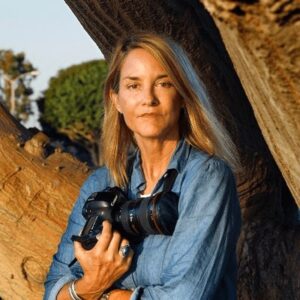

Carolyn Cole still vividly remembers the frustrations of early technology, but appreciates today’s improvements: good Wi-Fi, digital workflows, and safer equipment. At the same time, there remains a certain nostalgia for the old methods, when she worked with chemical solutions and literally got the chemicals on her hands by blowing on the photos. She notes that while this nostalgia is fun, it’s also less environmentally friendly, which is why she appreciates the new technology.
Her Motivation
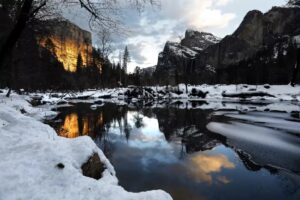
Between assignments, she often retreated to nature, for which she has a deep love. In recent years, she has consciously distanced herself from reporting in conflict zones.
The Environment
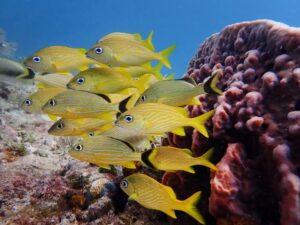

In conflicts, it is often clear what is happening and what needs to be documented. With environmental issues, it is different. The problems are well-known—we know that plastic pollution and air pollution are harmful—but how do you translate that knowledge into images that truly move people and inspire change?
Whereas Carolyn Cole used to instinctively know what to photograph, she now has to consciously consider how an image gains meaning. How do you ensure that someone feels connected to something abstract, such as a plastic bottle or the impact of a gasoline-powered car?
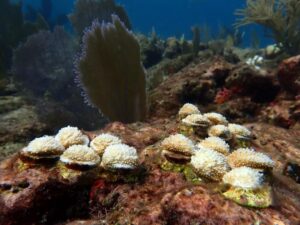
Whether underwater or on land, Carolyn Cole uses every means at her disposal to make the environmental crisis visible and tangible. In a way, this brings her full circle: she originally wanted to become a marine biologist, and now she’s returning to the ocean to focus on how she can use her photography to help the environment. As she herself says: ‘I may be more of a journalist than a photographer, but it’s just another side of the same coin.’
As part of Women’s History Month, the Los Angeles Times honored Carolyn Cole on March 31, 2021, with an online article and the publication of several of her photographs. You can find them here.
Conclusion


What ultimately makes her work so interesting is how it straddles the line between photojournalism and documentary photography. In Carolyn Cole’s early work—in conflict zones—she seems to operate primarily within the logic of photojournalism: being present, reacting, capturing. But in her later work on the environment and nature, that process shifts. There, the image becomes less self-evident. She has to reflect, search, construct—how do you make visible what isn’t immediately visible?
It is precisely in this shift that it becomes clear that the distinction between documentary photography and photojournalism does not lie in the image itself, but in the way it is created. In Carolyn Cole’s current work, both forms coexist—and ultimately merge into one another.
What continues to fascinate me personally about the female war photographers in the exhibition is that they constantly keep asking questions about the conditions of humanity, the earth, and the consequences of our actions. All their work reveals a profound commitment and passion—a dedication to making visible what happens to people, both in conflict and in the wider world. These are photographers who not only create images but tell stories that challenge us to reflect on reality and our role within it.
Johanna, 12 April 2026


