
Introduction
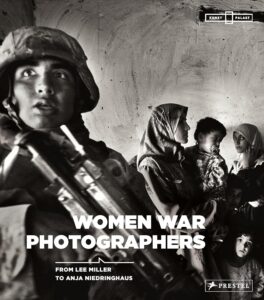

The more I study the work and lives of these photographers, the clearer it becomes how different their approaches were. At the same time, they all shared a fundamental experience: they had to fight for recognition in a male-dominated field of journalism—to be taken seriously, to gain access to conflict zones and to have their images published.
The start of her career as a photographer


Using a camera borrowed from her brother, who was a fashion photographer, she began to capture the events. This was not based on a preconceived plan or training, but rather a direct involvement in what was happening before her eyes.
The situation was dangerous. Both she and her brother were briefly imprisoned on suspicion of espionage. During this period, she made a decision that would shape the rest of her life: she wanted to use her camera to give a voice to the world’s oppressed as she called them. Like Catherine Leroy and Françoise Demulder, she was self-taught. Her desire to capture the world’s sorrow — a sorrow that resonated with her own inner loss — consciously brought her to the side of the marginalized.
Christine Spengler quickly learned what war photography entailed: being present, taking risks and having strong nerves. However, she avoided sensationalism and the macabre. Instead, she focused on the dignity and resilience of people who had to survive in extreme circumstances. However fragile it may have been, hope remained an essential element in her images.
Formative influences


Goya’s ‘Los Desastres de la Guerra’ made a deep impression on her. Christine Spengler later referred to Goya as her master because of the way he depicted the horrors of war without heroism or redemption.
She studied French and Spanish literature, initially aspiring to become a writer. At the same time, she spent a lot of time in Madrid’s churches, where she became fascinated by the Mourning Madonnas: adorned with jewels, suffering, theatrical and intensely present. Images of faith, horror, mourning and ritual — in short, visual drama — became embedded in her vision from an early age.
Break


Her work as a war photographer
Christine Spengler worked as a war photographer for more than thirty years, repeatedly finding herself in areas where violence dominated daily life. In 1972, she travelled to Northern Ireland to document the civil war there. This marked the start of her extensive reporting from conflict zones worldwide, including Vietnam (1973–1974), Cambodia (1974), Lebanon (1982–1984), Kurdistan (1983), Nicaragua (1980–1981), El Salvador (1981), Western Sahara (1976–1979), Kosovo (1997), Afghanistan (1997), Iran (1979) and Iraq (2003).


Image description


Christine Spengler paid particular attention to women and children. She demonstrated that women are not merely victims, but frequently play an active role in conflict situations, whether as caregivers, fighters or silent bearers of continuity.
Children also play a central role in her work. They are forced to grow up with weapons as a natural part of their environment and, in some conflicts, they even become involved in the violence. Christine Spengler was touched not only by their vulnerability, but also by their resilience. Despite the constant threat, her photos capture moments of play, intimacy and a zest for life. It is precisely this contradiction — life amid destruction — that gives her work a layered tension. Her work is not about the spectacle of war. Seeing the determination to carry on and preserve humanity, even in the most hopeless circumstances, gave her hope.
Learning to celebrate Life again


Christine Spengler later described this as the only moment in her career when she truly believed she was going to die. Ultimately, she convinced her captors of her identity as a French photojournalist by showing them her press documents and mentioning her work for agencies such as Sipa Press and Sygma. She was released. It was precisely this direct confrontation with death that brought about a shift: paradoxically, it reopened her eyes to the beauty and preciousness of life.
Transition to a different kind of work


These artistic works stand in sharp contrast to her serious and respectful black-and-white war photography. While her journalistic images are restrained and observational, her later work is distinctly baroque, colorful and symbolic.


Fashion
Christine Spengler only collaborated with the fashion industry on one occasion. Maria Grazia Chiuri, Dior’s first female creative director, asked the renowned war photographer to take the backstage photographs for the Autumn/Winter 2018 collection. Spengler paid tribute to the 1968 student protests by portraying the models as a marching unit. Watch an interview with Christine Spengler about this event here.
Awards and recognition
Femme de l’Année (2002): Awarded in Brussels in recognition of her decades-long career reporting from conflict zones such as Vietnam, Cambodia and Lebanon.
Chevalier des Arts et des Lettres (2006): She received this prestigious title in recognition of her artistic achievements.
Medalla de Oro (2006): She was awarded a gold medal by the municipality of San Antonio de Portmany in Ibiza, where she was also named ‘residente ilustre’.
Chevalier de la Légion d’Honneur (2009): She was awarded France’s highest national honor in recognition of her unique contribution to photography and her decades of work as a female war photographer.
The Prix Roger-Pic (SCAM) (1998): She won this prize from the Société Civile des Auteurs Multimédia in Paris for her impressive project, ‘Femmes dans la guerre’ (Women in War).


In 2020, she was also honored as the ‘marraine’ (patroness) of the ‘Les femmes ‘s exposent’ festival.
PUBLICATIONS









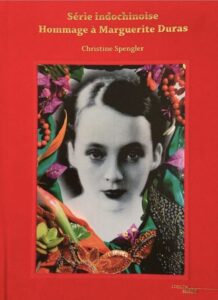



FINALLY
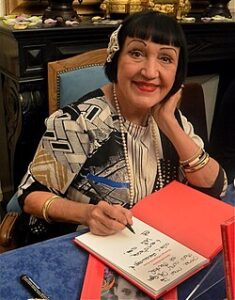

This has turned out to be a long blog post, but there was so much to say about Christine Spengler’s dedication, commitment, development and creativity. Reading about her inspires me to keep going, no matter how challenging the current circumstances may be.
Immersing myself in the life and work of Christine Spengler has once again shown me how closely personal history, moral choices and visual language are intertwined. Her photography is rooted in closeness, loss and the constant confrontation of death, yet simultaneously seeks traces of hope and beauty. You can find her website here.
NEXT BLOG


She first gained recognition for her poignant images of war-torn Nicaragua in the 1970s, but her work extends beyond conflict. Her early series on American carnival strippers also reveals her perspective on visibility, identity, and agency. Comparing these two photographers — their choices, perspectives and involvement — sheds new light on what it means to work as a woman in a field long dominated by men.
Johanna, 26 January 2026


