How my ‘white guilt’ gets in the way of African, African-American, Caribbean, and Surinamese art.
I thought I was a fairly nuanced person, someone open to new and challenging things, especially when it came to art.
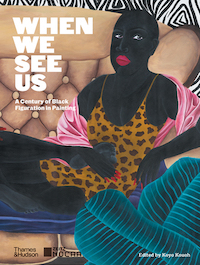
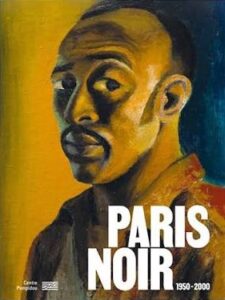
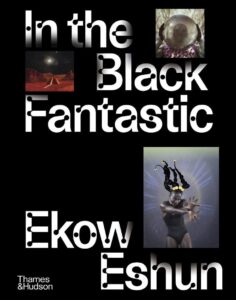
I visited many museums and viewed exhibitions such as Visions of possibilities by Patricia Kaersenhout, Jacob Lawrence: African American Modernist, Afrofuturistic Visions by AiRich, Matter of Place by Thomas J. Price, Painting the Town by Carrie Mae Weems, Paris Noir, When we see us and In the Black Fantastic. I also read books on African, African-American, Caribbean, and Surinamese art.
When I eventually found myself feeling a bit lost in it all, I started gathering even more information because I wanted answers and explanations. I thought that if I could just cram enough theory into my head, I would truly understand the meaning of this art. On top of that, I was trying to understand exactly what the curators wanted to convey through the setup of their exhibitions. For instance, with When We See Us, the intention was to steer away from a narrative solely focused on trauma and colonialism, showcasing instead the richness of everyday life. With Paris Noir, it was about correcting historical omissions in art history. With In the Black Fantastic, the primary goal was to address racism and social injustice by using the power of imagination, mythology, and science fiction.


I thought my (white) good intentions were enough to freely understand those universal human emotions and anti-colonial solidarity. But how wrong I was. My urge for theory was, in fact, a quest for control.
The threshold of Noir Noir



When I stepped inside their space, all the theoretical knowledge I had gathered more or less dissolved. I suddenly felt that I actually knew nothing about this culture and community. I come from a completely different era, a different world, and a different generation; back when their cultural forms were emerging, I was busy raising a family. I lacked the codes, the rhythms, and the context. In that space at Noir Noir, I was neither an ‘expert’ nor a ‘culture lover’. I felt like a complete outsider. For the first time, I felt what it is like when a space is not designed specifically for me.
Reflex
My automatic reflex was defensive. Instead of simply listening to what the art and the community at Noir Noir were showing, I became guarded and went on the defensive. By then, I had grown accustomed to the fact that with every confrontation with African, African-American, Caribbean, and Surinamese art—with its layered pain, history, and decolonial urgency—a suffocating, paralyzing ‘white guilt’ would always rise to the surface. So it happened here too, even though the art in Noir Noir did not project that at all.
My (guilty) feelings
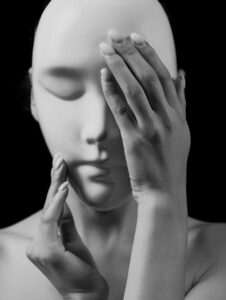

What I discovered was that I immediately reduced the other person’s art and culture to a kind of ‘object of study’ or labeled it as ‘suffering’. I didn’t realize that by doing so, I was actually denying their free expression. I realized that I was using their history to feed my own emotional household, and as an emotional excuse for my own privileged position.
What follows …
Sigmar Vriesde and the other artists of Noir Noir, among others, are not there to educate me. They are not there to absolve me of my guilt or to extend a hand. They are building their own, independent story. If I truly want to be open to what is there, I have to let go of my urge for control and my claim to ‘understanding’. I must stop consuming and appropriating their culture. I must learn to endure standing on the outside. I do not need to free myself from the past; I simply need to dare to see the limits of my own gaze.

In doing so, I will not sneak through a back door to seek control in

I have decided that I will no longer avoid the discomfort. It is time to make room and have an eye for the own, independent voice of the artists. I will begin with the beauty of the work itself, and from there feel the freedom to face the entire story—no matter how jarring it may be.
In my next blog, I will write about the aesthetic enchantment of Patricia Kaersenhout’s‘art. Her work always touches me instantly through its immense beauty, while I also know that deeper, layered stories are patiently waiting to be unraveled.
Johanna


