Introduction
In my previous blog post, ‘Why an open cultural sector is still a myth’, I took a fierce stance against institutional racism and the insular nature of the art world. As an art ‘lover’, and emphatically not a true ‘connoisseur’, I observe things from the sidelines—through courses, reviews, books, and exhibitions. I am an ‘outsider’, and perhaps my immediate reactions can sometimes be a bit too knee-jerk
Everybody hates quotas
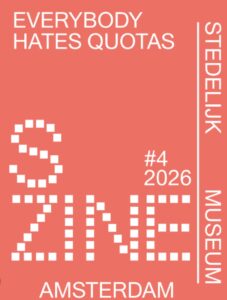


The inevitable debate erupted: from that point on, was it still about the quality of the artwork, or purely about the artist’s background? Regardless, the Stedelijk wanted to make a radical catch-up effort and deployed this drastic measure.
The result
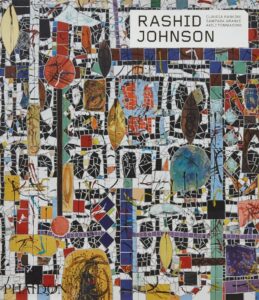


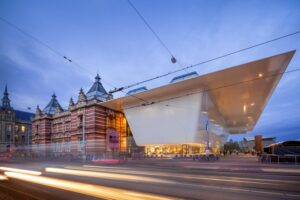
Why? Because the Stedelijk Museum is wrestling with its own history. A massive part of its permanent collection consists of monumental canvases from the white, male canon of the 1960s and 1970s. To physically break that historical power structure in the galleries, the museum now buys equally monumental installations that can hold their own alongside them. Private donors play a role too: they simply tend to attach their money to established names whose status is beyond question.
Younger artists
Fortunately, the Stedelijk has a modest, internal budget of €100,000 specifically allocated to young artists under the age of 35. Within that group, 80% falls within the quota. Here, the museum attempts to use its institutional weight to offer a platform to young talent. Important themes within this segment include ‘in-betweenness’ (the creative intermediate zone) and collective practice (artists working from a deep connection to their local community). However, the study also exposed a shadow side: it is now young, white, male artists who barely feature in the programming and receive virtually no funding.
The Stedelijk Museum versus Kunstinstituut Melly
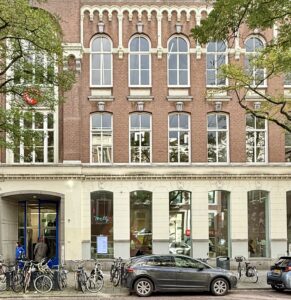

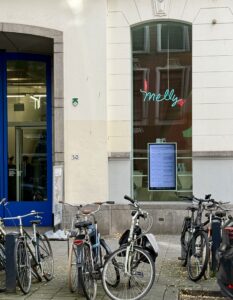


Melly is of a different order: it is a dynamic meeting place without a permanent collection, and thus without that historical baggage. Since its radical transformation in 2021, the focus has been entirely on decolonization, public engagement, and collective learning.
Its objective is to be an open space where societal questions are asked and where the hierarchy between the ‘connoisseur’ and the public completely blurs. The Stedelijk Museum tries to repair the existing system; Melly redefines it from the ground up.
Moshekwa Langa in Rotterdam
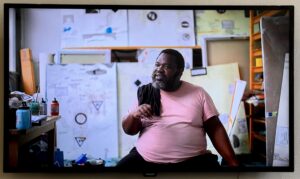
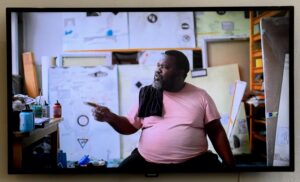


In an interview with the NRC, he noted: ‘Everyone sees you, looks at you, but they also look right past you.’
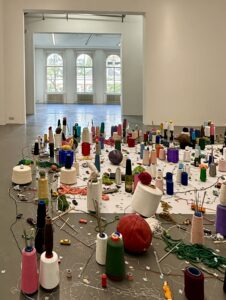

The physical objects exist within the institutional archives. Yet, actually claiming physical gallery space—the opportunity to let an entire life’s work breathe across four floors—remained out of reach. It proves that acquisition policies and genuine public visibility are two completely different things.
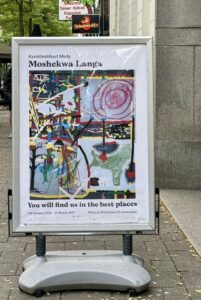

Who is Moshekwa Langa?
He was born in 1975 in Bakenberg, a village in the northern Limpopo province of South Africa. He is no novice waiting to be discovered. He broke through internationally in the mid-1990s as one of the first young Black artists after the fall of apartheid.
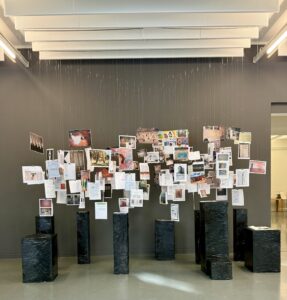
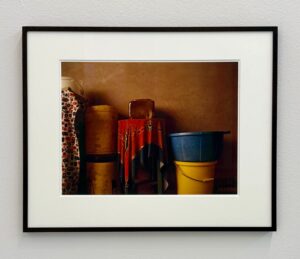


His work is held by world-renowned institutions such as MoMA in New York and Tate Modern in London, and he has participated in the Venice and São Paulo Biennials. As a multidisciplinary artist, he refuses to be pigeonholed.
He creates massive installations, collages, and videos from everyday, found materials: from maps and plastic bags to coffee grounds, newspaper clippings, and string.
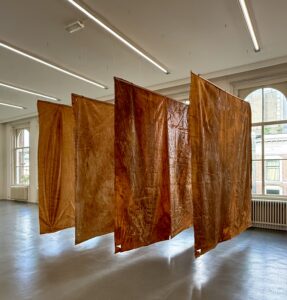
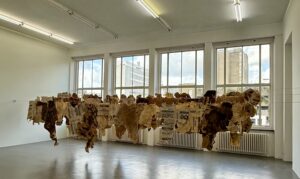


His style is poetic, layered, and rebellious. He investigates themes of displacement and identity by directing his gaze almost like an anthropologist toward his own life and birthplace. A well-known example is his fascination with redrawing maps—which arose because his home village was literally omitted from official maps during apartheid. But Langa does not just redraw geopolitical borders; his mixed-media collages, videos, and photographic portraits of the village residents together form an alternative, deeply personal map of emotions and memories.
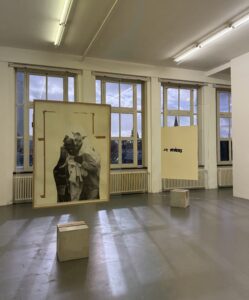
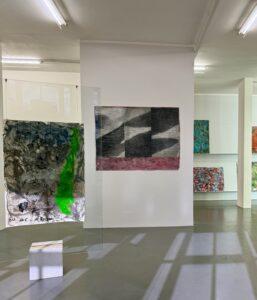


The exhibition at Melly, which spans all four floors of the building, is his first truly major retrospective here.
As an art house, Melly has no permanent collection. It does not have to prove that an acquisition is ‘grand and impressive enough’ to hang alongside the old, white guard (as the Stedelijk Museum must). This gives Langa complete freedom to seek out that elusive, ‘liminal’ zone in which he loves to operate: the twilight zone between harsh reality and the dream world, the point at which you try to make sense of the world around you.
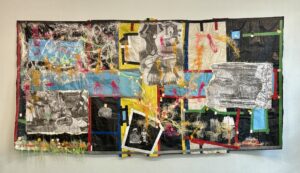

Under the leadership of director Gabi Ngcobo, Melly proves that true openness is not about multi-million budgets, but about the courage to look critically at oneself and truly provide a stage for others.
What I have learned while writing this blog is that in my reflections, I need to take more into account what the specific objective of the museum, the institution, or the platform is. An institutional course correction is simply a more complex process for a historical institution than for a young, flexible organization. Rigid quotas and massive budgets cannot simply wipe away historical baggage.


Next time, I’ll be exploring again the world of graffiti and street art.
Johanna


