
Introduction
In my previous blogs, I searched for the meaning of ‘hybrid viewing’ and how to apply it to artistic expressions. I wanted to find a path through it and truly understand it, but along the way, my critical intuition resurfaced—particularly regarding the restrictive structures within the Dutch art world.
Autonomous?

This makes me question the risk of this art once again being forced into a Western, ‘approved’ format just to satisfy the diversity goals and benchmarks of the institution.
Improving the world?
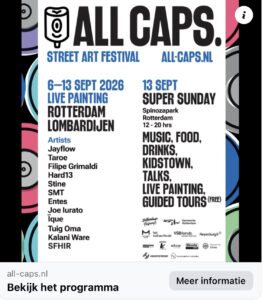

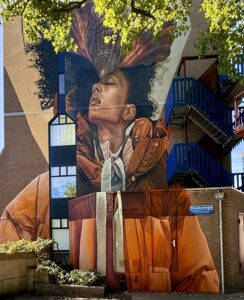
I plan to visit the street art festival organized by ALL CAPS, which will take over the Lombardijen district in Rotterdam from September 6 to 13, 2026. The organization, rooted in the independent hip-hop platform Hiphop In Je Smoel, places a provocative question at the heart of its program: “Can street art improve the world?”. When looking at the funding of such large-scale festivals, I notice that the local government (the institution) provides substantial subsidies.
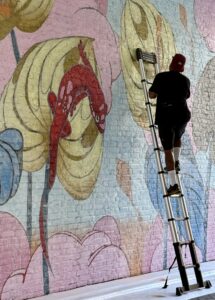

Must a muralist in Rotterdam-Lombardijen necessarily cheer up the neighborhood or fix the world, or can the artwork simply exist as an autonomous, layered aesthetic form?
Jean-Michel Basquiat

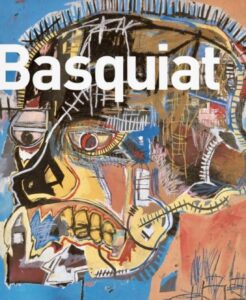

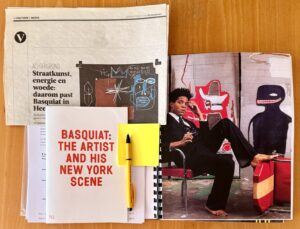

Breakthrough
He made the definitive transition from street graffiti to professional studio art between 1980 and 1981. Within a single year, he transformed from a street artist into a global art sensation. In 1980, he abandoned the ‘SAMO©’ tag, painted ‘SAMO© IS DEAD’ all over the walls of Manhattan, and focused entirely on canvas painting.
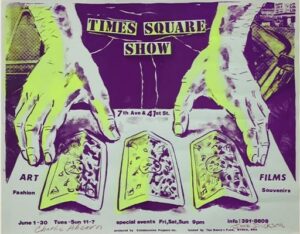

By 1981, his first major solo exhibition opened and completely sold out immediately, turning him into an instant, wealthy global star at just 21 years old.
Heerlen
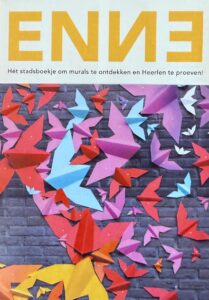

Just like New York, this marginalized space provided the perfect, hybrid breeding ground for a creative subculture, using street art as an art form that connects, surprises, and amazes. The streetart initiative began in 2013, and by 2023, the city boasted 75 large and small murals. In Heerlen too, local and provincial authorities were heavily involved.
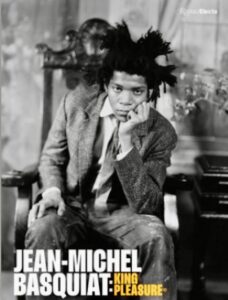
Jean-Michel Basquiat at Galerie Delta in Rotterdam
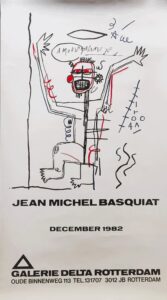

Today, those exact same works are traded for millions by the global elite. Prices for Jean-Michel Basquiat’s work range from a few million to over 110 million dollars. Back then, the raw street culture was far more visionary than ‘the institution’ and the art world that only embraced it much later.
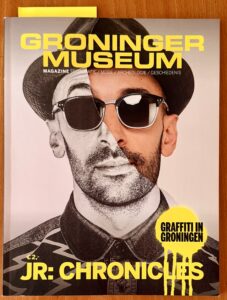
JR
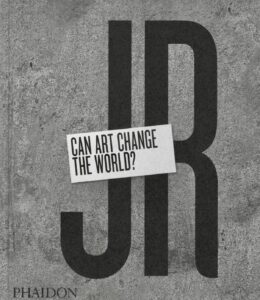
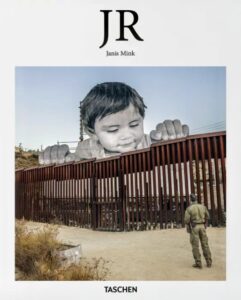


By pure chance, he found a camera in the Paris metro and discovered photography. He began photographing his friends while they were painting graffiti.
Because he could not or did not want to show his photographs in traditional galleries, he brought them back to the streets. He printed his images cheaply on paper, cut them out, and pasted them onto walls using wheat paste. He framed the photos with a thick layer of black spray paint, making them look like framed paintings in public spaces.
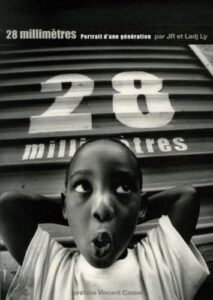

He illegally pasted these monumental portraits across the wealthiest districts of Paris under the title Portrait d’une Génération. By doing so, he replaced frightening media stereotypes with human faces, permanently cementing his world-famous signature style of giant photo fly postings. He has grown into one of the most influential and famous contemporary artists in the world, holding a status comparable to Banksy. He describes himself as an urban activart (street painter) and is globally renowned for his massive black-and-white portraits in iconic locations.
Changing the world?
In 2011, he won the TED Prize of $100,000 for his vision to change the world through art. This sparked the launch of his Inside Out Project, which has enabled over 500,000 people across 150 countries to paste their own giant portraits in public spaces. In 2018, Time Magazine officially named him one of the 100 most influential people in the world.
JR within the walls of the Institution
Today, his work hangs inside the world’s grandest museums (such as MoMA in New York and Centre Pompidou in Paris), while he simultaneously continues to illegally paste posters in favelas and conflict zones.

By pasting larger-than-life portraits of them onto their own walls, he forced the world to look at their gaze.
The True Lesson
The true lesson that street art teaches the art scene is that art does not change the world by conforming to comfortable, subsidized expectations and institutional demands. It changes the world because it reclaims public space and confronts the viewer with codes and narratives that were never designed for the comfort of the traditional elite. Street art reveals reality!
Grassroots Courage

This connects back to my previous blog, where I explored the vision of Kenyan author Binyavanga Wainaina. He described how vital it is for Africa to spark transformation from the ground up (Pan-Africanism from below).


When is something art?
The institutions and the art elite dictate whether something qualifies as art or not. But when is something art? The street and the diaspora show us that art does not merely come into existence when it is placed within a quiet, institutional hall. Art is the autonomous appropriation of form, aesthetics, and space to tell one’s own story.
Breaking the rigid frames
My search for hybrid viewing brought me to the realization that dismantling these rigid societal frameworks requires two distinct, yet equally vital strategies.

The Route from Within: The ‘join them to beat them’ strategy. Securing a foothold and infiltrating the walls of institutions like museums and governments to transform the establishment from within.
Art historian and curator Charl Landvreugd chose this path by entering the gates of the Stedelijk Museum Amsterdam. It is an effort to permanently alter the structures of the art world from the inside out, reflecting the ‘heavy intellectual lifting’ described by Cameroonian philosopher Achille Mbembe.
Conclusion

Johanna


