Introduction
In my previous blog, “Does art have to improve the world”, I concluded with two potential routes that could better facilitate integration and diversity within the cultural sector. The first route was the autonomous one, by which I meant initiatives that follow their own path entirely outside the walls of the established order (museums, institutes). The second route is to conquer a space from within existing museums and institutes to demand more attention for diversity and integration there.
Outside the Established Order


Why It Kept Me Occupied

I had absolutely nothing to complain about regarding my youth, as my parents were very loving, caring, social, and involved.
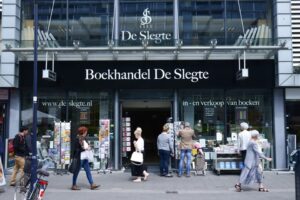

From the age of 11, I started visiting ‘De Slegte’ (a bookstore) in Rotterdam, buying very inexpensive books about art, and step by step, I developed my knowledge.
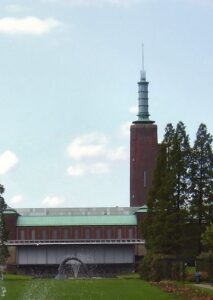

Both the museum and the galleries were visited by “the elite”. The elite had learned from a young age how to navigate certain circles and environments, and they possessed ample financial means. Therefore, they experienced no barrier when it came to a museum, gallery, concert hall, or theatre. In short, they were able to absorb culture right from their youth.
Has Anything Changed?
I wonder if anything has truly changed. Is a museum more accessible now, and does that apply to everyone? In my previous blogs about “hybrid viewing”, I already mentioned that the offerings in museums are primarily aimed at the art elite. In addition, museum admission fees are around €16 to €20.
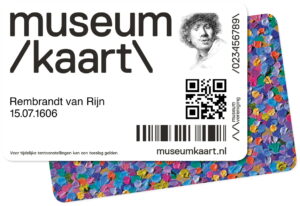


A national Museum Card (Museumkaart) for an adult costs €69 per year, and a kids’ version costs €39. While that does give you unlimited access, imagine a family with two children (the average in the Netherlands)—that will set you back €216 on an annual basis.
The Financial Reality

On top of that, there is a massive group of 1.1 million “near-poor.” They earn just slightly too much to qualify for allowances or official welfare support, but they have absolutely no financial buffer left after paying their fixed living costs. All in all, we are talking about more than 2 million Dutch citizens—amounting to more than one in nine inhabitants.
Stress
But finances are not the only problem. When you have to fight every month just to make ends meet, you get trapped in a kind of survival mode. Poverty drains mental energy, and when your head is full of stress over bills or groceries, there is simply no room, time, or peace left for culture. Art loses all priority, and consequently, an interest in it is never sparked in the children either. Culturing oneself thus remains, just as in my youth, a privilege for those who possess sufficient financial means.
How to Lower the Thresholds?

In Rotterdam, people are trying very hard to lower these thresholds, for example with the Rotterdampas. While it normally costs €65, families living at or around the social minimum pay only €5 per adult thanks to municipal low-income schemes, and the pass is entirely free for their children up to the age of 17. With that pass, you get unlimited free entry to almost all art and cultural venues in Rotterdam, such as the Kunsthal, the Wereldmuseum, and the Netherlands Fotomuseum. The facilities are there. Yet, reality remains stubborn at times.
Migration Museum Fenix
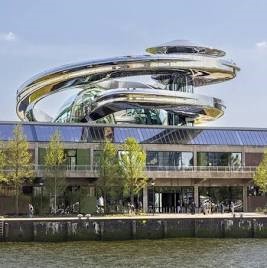

So, as long as the mental and institutional barriers remain sky-high, the wonderful arrangements in Rotterdam stay a paper reality despite everything. The doors are open, but the threshold to actually cross that threshold remains too high for many.
Exclusion
My own background explains a lot about why I am so fiercely opposed to any form of human exclusion. Besides money, the system erects numerous other barriers. Whether it concerns class, social background, education level, race, gender, physical disability, age, geographic origin, or neurodiversity: the doors of the established order still do not seem to stand equally wide open for everyone.
Initiatives Outside the Walls
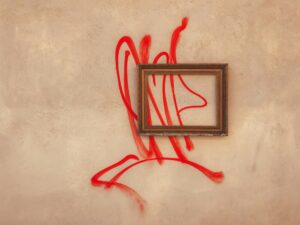

They invite national and international street artists to cover neighborhood walls with artwork within a single week.
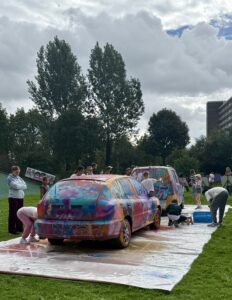
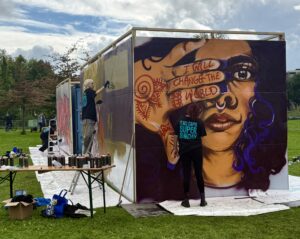


Residents come into contact with art and with one another—encounters that otherwise might never have happened. Additionally, the murals brighten up the environment.
My Visit to the Street Art Festival
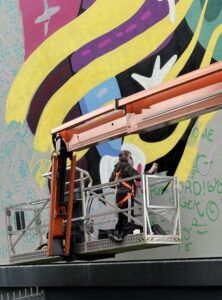
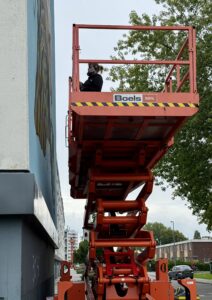
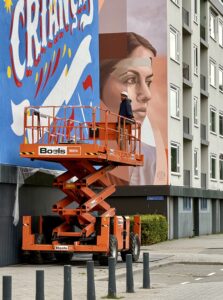
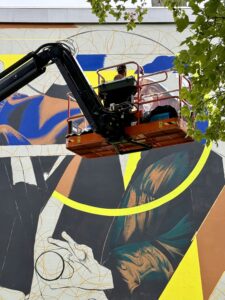


I went to see the street art in Rotterdam-Lombardijen twice.
Mid-week, in the pouring rain, I spoke with others who, just like me, were walking along the pieces in progress. Despite the rain, the artists steadily kept going.
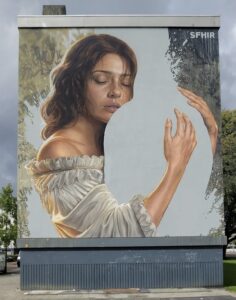
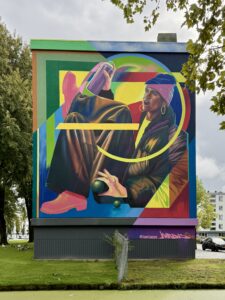
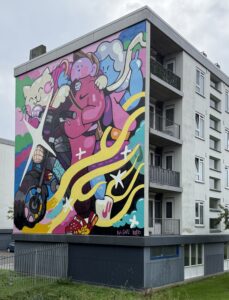


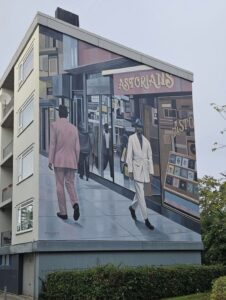

The second time I visited, on the closing day, most of the murals were finished. All the walls looked beautiful. Some displayed a purely layered, autonomous aesthetic form—work that was simply allowed to exist for its own beauty.
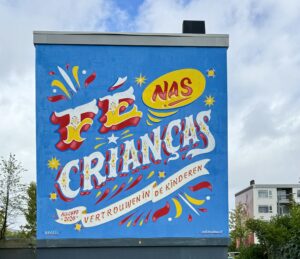
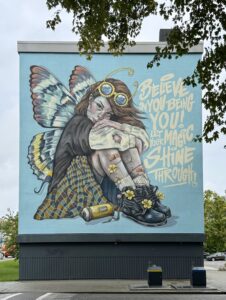


And that is precisely the reason why initiatives like ALL CAPS, as well as gallery NoirNoir—operating outside the formal, restrictive frameworks—are so incredibly valuable.
From the Inside Out
After stepping outside the “beaten tracks” a few times, I am now returning to the museum—to look at how artists and art historians/curators are tackling the system from the inside out. I will write about that in my next blog. Will you read along?
Johanna
P.S. Curious about the route and all the artists of this edition? Download the official ALL CAPS Lombardijen 2026 Program Booklet (PDF) here.


