Art as Therapy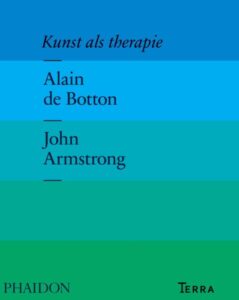


At the time, the authors fiercely criticized the traditional art world; they believed museums isolated art too much behind elite thresholds and academic labels, causing this therapeutic effect to be lost.
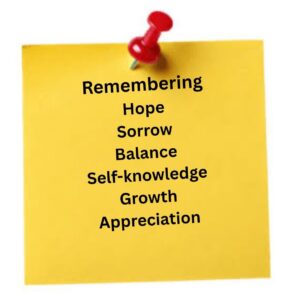
To put their theory into practice, the authors carried out a high-profile intervention in Amsterdam’s Rijksmuseum in 2014 with their exhibition ‘Art as Therapy’, covering classical masterpieces with giant, yellow Post-it notes filled with life lessons. Although critics at the time found the action patronizing, the core idea of the book touches me deeply. As a spectator, I recognize these functions like no other: art has always offered me comfort, hope, and a challenge to grow in my own life—and it does so once again now.
If there is one art form that effortlessly translates this promise into practice—free, accessible, and right in the middle of real life—it is street art. Street art does not wait for us to buy a museum ticket; it catches us by surprise during our daily routine and transforms the gray public space into a place of comfort, inspiration, and encounter. Last Sunday, I experienced the healing and connecting power of this outdoor art firsthand.
The Art Route in the Autumn Storm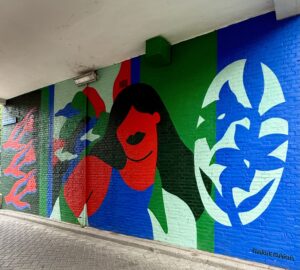
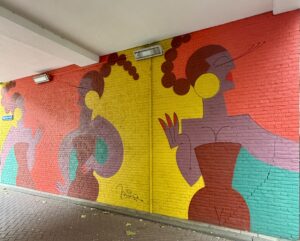


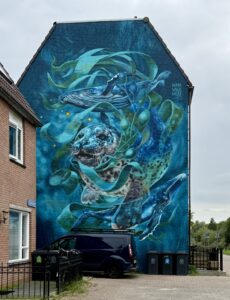
Standing there in the rain—and taking photos myself that I will share in this blog—I felt the genuine energy of this initiative. With the exception of two murals by international artists, this was truly the work of mainly Dutch and local creators. 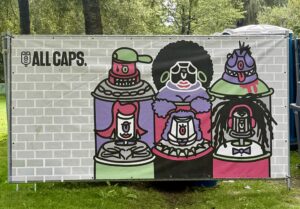

This project was realized by ALL CAPS in close cooperation with the local entrepreneurs of the BIZ (Business Improvement Zone) and art center Garage Rotterdam.
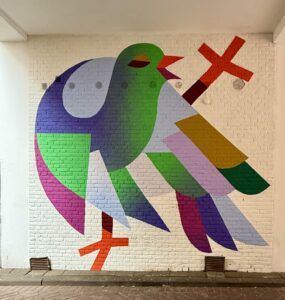

Appreciation and Remembrance in the Beverwaard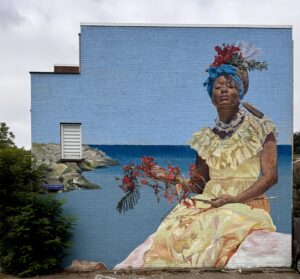


He was kind enough to show me around and told me about artistic interventions and what they entail: an artist intervenes in the familiar streetscape to get passersby thinking.
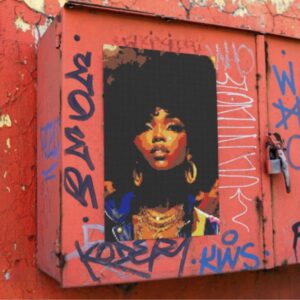

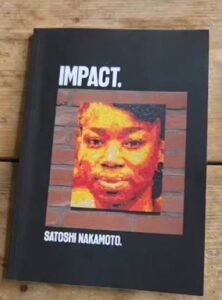

Elsewhere in the city, Satoshi Nakamoto also hangs up portraits that are frequently taken down by people. On the one hand, he experiences this as a compliment, but on the other hand, his ultimate goal remains for everyone to be able to enjoy them outside on the street.
The Language of the Street as Personal Growth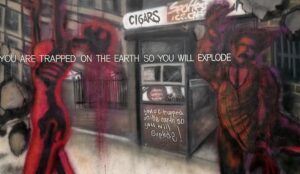
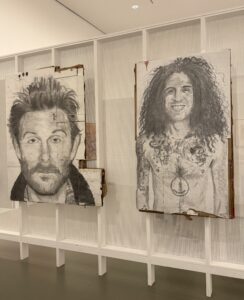


Thanks to his input, my journey did not stop in Rotterdam; last week I visited the major exhibition Graffiti the Centraal Museum in Utrecht to better understand the historical roots of graffiti, and I also bought 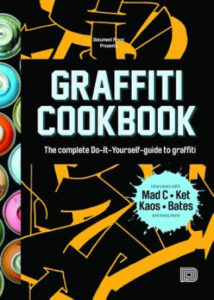

The sincere soul of the street
Whether it is a large-scale mural or graffiti, stickers, and interventions applied in the public space: you can taste the same genuine soul everywhere. All these creators are sincere and driven; they use the public space to tell something essential, but because part of this culture sometimes operates outside official boundaries, many writers work under an alias to protect their anonymity.
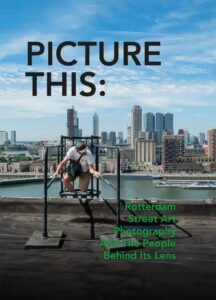

I was also struck by the story in the book about Ben Melger, who under the name oerendhard1 uploaded some 56,000 photos to Flickr, about 45,000 of which contained graffiti. He was an art lover just like me, but when he saw graffiti on a train one day, he was instantly hooked. That is where his fascination began.
After his retirement, he continued spotting graffiti at train stations, but that yielded little result. Cycling through Rotterdam, he searched for spots where graffiti was depicted, and gradually he discovered more and more where it could be found. Through the Rotterdam street art collective Lastplak, he gained a better view of where to find the graffiti. The raw edge of graffiti appealed to him greatly, and he continued capturing graffiti in Rotterdam until the end of his life. I admire that soul and passion enormously.
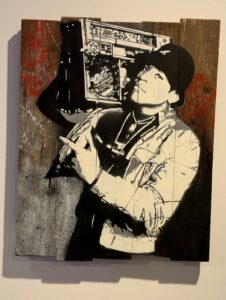
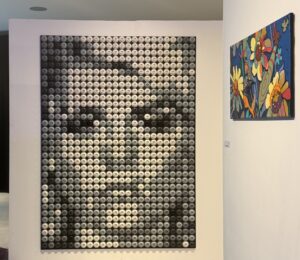


What I enjoy, now that I am getting in touch more with artists and enthusiasts from the street art scene, is that people are so enthusiastic and eager to share it with me. There, I spoke with an ‘expert’ I hadn’t met before who shared his infectious enthusiasm with me. He explained the artists, the work, the terminology used in the street art world, and he also gave me a valuable photography tip: that I didn’t have to photograph these artistic expressions perfectly straight at all. By tilting or holding my camera at an angle, I would bring much more dynamics and tension into the image. I put this technique to the test right away last Sunday during the storm in Rotterdam.
The Street as Our Collective Memory
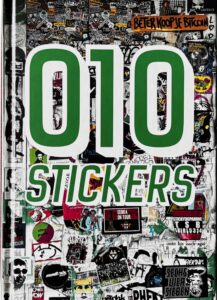

It will come as no surprise that I see aspects of myself in the street art world. I love color, connection, and encouragement, but also pushing boundaries. These are all themes that Alain de Botton and John Armstrong wrote about in their book ‘Art as Therapy’. Art does not only offer encouragement, remembrance, hope, or comfort inside a museum; the street too, in all its different forms of expression and layers, is a beacon of hope and inspiration right in the middle of daily life—and because of that, it belongs a little bit to all of us.
Johanna


