
Documentary Photography
As you may know from my previous posts, I have a deep passion for photography. This interest was sparked when my son Raoul introduced me to the world of documentary photography, which has since captivated me.
Definition of Documentary Photography
Documentary photography encompasses images that strive to capture real-life scenes and events without manipulation. These photos serve to inform audiences about hidden aspects of contemporary life and often become part of the historical record. While motivations for pursuing documentary photography vary, most practitioners aim to address social issues, conduct research, raise awareness, or create compelling visual narratives. Authenticity is paramount in this style of photography, with practitioners avoiding manipulation of their subjects or images.
Kadir van Lohuizen
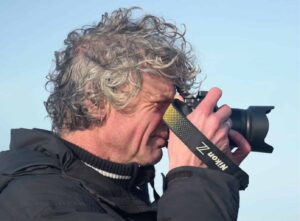 One of the most significant documentary photographers in the Netherlands, Kadir van Lohuizen, has made a profound impact on me through his work. His journey began with a rejection from the Royal Academy of Art in The Hague, Netherlands due to a lack of motivation, but he later found his calling in documenting political and social issues through photography. His projects, characterized by their depth and breadth, shed light on injustices and human rights violations worldwide.
Below I will give you a short summary of some projects.
The Seven World Rivers
It tells the story of life on and along the seven great rivers of the world: the Niger, Ganges, Yangtze, Amazon, Donau, Ob and Mississippi. Kadir van Lohuizen followed the rivers from source to mouth. They are the connection between east and west, north and south and are silent witnesses of historical events. He started his river project in 1996 and it ended in 2003. Via the Niger, he made a long journey through the poorest parts of Africa. The poverty is evident in the photographs, but above all, the strength of the people he captures speaks volumes.
Diamond Matters
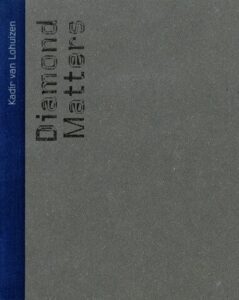 In 2005, he shaped the Diamond Matters project. It is about the route that diamonds from Africa take from mine to consumer. In African countries like Congo, Sierra Leone and Angola, the diamond trade regularly led to conflicts between tribes. They often used the proceeds for themselves. Things have changed since then because the diamond industry does have a clearer following, is more transparent. Only a small group benefits from it. Kadir shows the workers, the traders and the working conditions and he also shows how the money flows.
Via PanAm
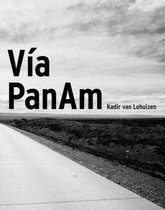 The PanAm project follows in 2013 and is about why people migrate. Where do they go and for what reasons? What is the fate of different indigenous peoples in the Americas? In Via PanAm, Kadir van Lohuizen investigates the roots of migration in the Americas (North and South America). He traveled nearly 40,000 km along the Pan-American Highway, crossing 15 countries and portraying the stories of the communities, regions and societies he encountered.
Migration is increasingly portrayed as a new threat but is a phenomenon as old as mankind. People move across the continent. Looking for work, a different life, a better life and fleeing because of conflicts. Sometimes people cross a border for this, often they move to other regions in their own countries. America in particular is an interesting continent because of its long history of migration and political developments in both South and North America. By examining and visualizing these movements, Kadir van Lohuizen wanted to contribute to a better understanding of migration and the Americas through PanAm.
If you are interested in seeing more about this, there is a Tedtalk where Kadir explains his project: Contemporary migration in the Americas
Wasteland
Wasteland is a project from 2016. For this, Kadir photographed garbage heaps in 6 world cities: Amsterdam, Jakarta, Sao Paulo, New York, Lagos and Tokyo. He climbed immense garbage dumps but also visited clean recycling centers. Plastic, cardboard, metal and food scraps, as far as the eye can see. The amount of waste produced by humans is already barely manageable and keeps growing. But are people aware of it? Is the problem solvable?
The Consequences of Rising Sea Levels
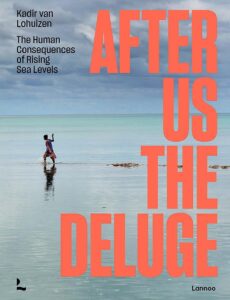 This project followed in 2021. Via Greenland, Miami, New York, Kiribati, Marshall Island, Fuji, Jakarta, Bangladesh, Papua New Guinea, Panama and the United Kingdom, Kadir van Lohuizen went in search of the impact of rising water levels. He also took photographs in the Netherlands. He conducted research and spoke with both policy makers and the population to highlight different perspectives on the climate crisis. It is a confrontational picture of the near future.
The exposition ‘After us the Deluge’ was in: Scheepvaartmuseum, Amsterdam
Food for Thought
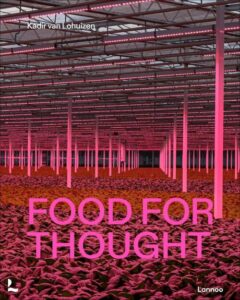 His latest project is from 2023. The project was initially about the food chain in the Netherlands but later he expanded his project to countries such as Kenya, the United States, the United Arab Emirates and China. You can see in the pictures how the technology has become indispensable in the food industry. In his lectures on the subject, he talks about the fact that young people (in The Netherlands) are actually disconnected with regard to food. They no longer have any idea how it comes about.
The how and what
Two decades ago, politicians in the Netherlands were concerned about whether there was enough food to feed some 17 million people in the Netherlands in the future. The challenge was to produce twice as much food with half as many resources. Well that succeeded! The Netherlands is the second largest food exporting country. The United States is number one.
So what made the Netherlands so great? Because of agricultural and food technology. People developed cultured meat, vertical farming, seed technology and use of robots in milking and harvesting. They also developed new techniques aimed at reducing water use as well as carbon dioxide (CO2) and methane emissions. Because the Netherlands covers a small area and has a rainy climate, the Netherlands have become very efficient
The exposition ‘Food for thought’ was in Scheepvaartmuseum, Amsterdam
Each project offers a unique perspective on pressing global issues, from environmental degradation to socio-economic disparities.
Awards
 In 1998, van Lohuizen won the prestigious Dutch award “de Zilveren Camera,” for his story on Rwandan refugees in Zaire. He also received the second prize Spot News prize at World Press Photo for the same story.
In 2000 and 2005, he won the Dick Scherpenzeel prize in Holland for best reporting on the developing world.
In 2006, he won the prize for investigative journalism in Holland and Belgium for his story on the diamond industry; he also received a second prize, contemporary issues, at World Press Photo for the same story.
In 2007, he won the Kees Scherer prize for the best photobook (Diamond matters) in Holland in the last two years.
Additionally, in 2006 he won a PDN annual award in the United States for his work in Chad.
For further exploration of his work, you can watch his documentary “This is what the Dutch food industry looks like” on VPRO: Part 1 Part 2 or visit the website of Noor, the photo agency he co-founded: Noor images
Conclusion
Kadir van Lohuizen’s contributions to documentary photography are invaluable, inspiring viewers to confront pressing societal challenges.
Johanna
