
Introduction


Deceived
Looking back, I feel enormously deceived and manipulated because of this. But as I described in my previous blog post, the cause lies in how the system is structured. Our ingrained mindsets—and therefore also those of curators and museum directors—were shaped by the times in which we grew up. Now, much has changed and the time seems ripe for transformation. Yet that change progresses with difficulty. Art, after all, cannot simply be defined. Not by a white person, but even within the world of African-Caribbean and Surinamese writers, philosophers, and artists themselves, opinions on this vary widely.
Bye-Bye Babar
This brings me directly to an essay that significantly shook up my own ingrained mindsets: ‘Bye-Bye, Babar (Or: What is an Afropolitan?)’ from 2005 by the Ghanaian-Nigerian writer Taiye Selasi.
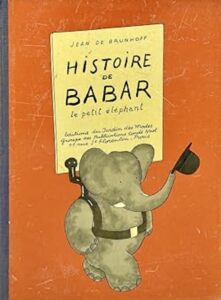

At the time, she introduced a provocative concept: the ‘Afropolitan’. She resolutely said goodbye to old stereotypes. On the one hand, to ‘Babar’—the colonial, Western children’s book elephant that simplifies Africa to mere tradition or wilderness—and on the other hand, to the film Coming to America (1988), which at the time presented a cliché, clumsy image of an African migrant.
Selasi shows how the general perception in the years following that film radically transformed from ‘goofy’ to ‘gorgeous’. Instead of those old, one-dimensional frameworks, she showcased a new generation of African global citizens: global, multilingual, successful, and trendy. It was a liberating and glamorous statement, but one that quickly faced criticism. For is this flawless cosmopolitan identity not a luxury position reserved only for a small elite?
The reactions from the intellectual and artistic world were not long in coming. Three voices stand out specifically: Achille Mbembe, Binyavanga Wainaina, and Marta Tveit, because they each demonstrate how complex our ‘problem space’ actually is. They warn us not to simply step into a new, oversimplified mindset. The first to introduce a profound, philosophical nuance was Achille Mbembe.
Achille Mbembe: From Cosmopolitan Dream to the Harsh Reality
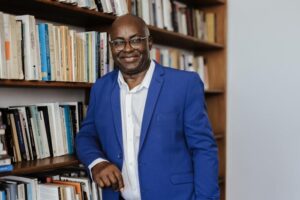

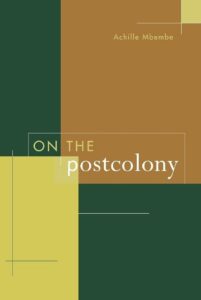
But the theory of ‘free movement’ and ‘hybrid looking’—however beautiful it may sound—is incredibly difficult to realize in practice. Mbembe’s successive publications do not form a passive book list, but rather an active representation of a mindset that grows with the times. It shows the reader why hybrid looking is a true ‘intellectual labor’; a process in which even a great thinker like Mbembe must constantly revise his own frameworks. This is clearly evident from the chronology of his work:

2003 – Necropolitics (Essay): In this groundbreaking, early essay, Mbembe introduced a pitch-black concept that put him on the global map. He argues that sovereign power ultimately revolves around ‘necropolitics’: the capacity of systems and states to decide which groups of people may live and who are left to die (as later became painfully visible at international borders).
2007 – Afropolitanism (The Afropolitan) (Essay): Shortly after Taiye Selasi’s text, Mbembe wrote his own essay on Afropolitanism. In this specific period, this concept was his only, optimistic escape route: a fervent plea for cultural openness and global citizenship.
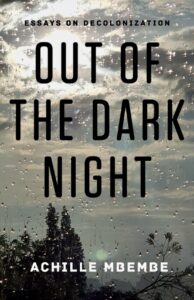

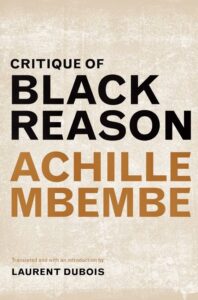

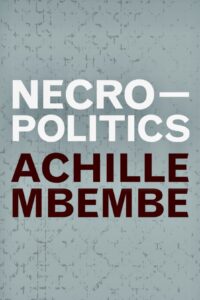

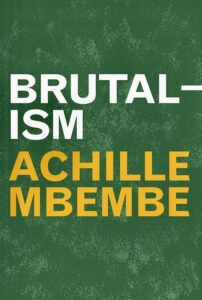

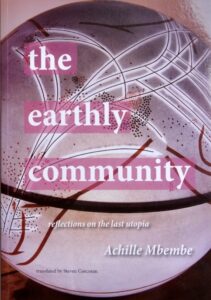



This is the harsh reality: hybrid looking is not a cozy choice, it is an intellectual labor that constantly tests our ingrained frameworks. And Mbembe primarily guards these large, global, and ecological shifts.
But how does this play out in the practice of the art and culture world? How does a maker break free from the Western format? In my next blog post, I will leave abstract philosophy behind and dive into the tempestuous life of the Kenyan writer and activist Binyavanga Wainaina. He turned theory into direct, dangerous action and refused to let his identity be consumed like a trendy designer brand.
Will you travel with me again next time?
Johanna


P.S. 1: Want to experience this ‘hybrid looking’ in practice? Don’t forget to visit Galerie Noir Noir. It is exactly the place where these complex artistic dialogues come alive and where your own gaze is beautifully challenged.
P.S. 2 For those who want to hear Achille Mbembe himself speak on these themes, his recent interview ‘Why Africa Is Still Not Free After 70 Years’ on YouTube comes highly recommended. In it, he reflects deeply on the current state of the ‘postcolony’.
He warns of a global, ‘brutalist-exclusionary’ shift that directly echoes the way art world canons and walls are stubbornly maintained. His insistence that critical consciousness does not emerge spontaneously but must be actively cultivated, strikingly underscores why the ‘intellectual labor’ of learning to look hybridly is so necessary for us to truly learn to relate to the work of Black artists.


