Introduction
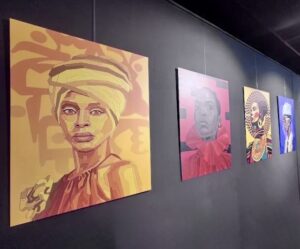

Hybrid looking is about viewing art through different cultural and historical lenses. Not purely from traditional, Western art history, but consciously trying to combine that with non-Western perspectives, cultural codes, and the colonial past.
Black artists often create work that responds to the Western art world, but is also deeply rooted in their own Black culture or history. I try to see both layers, which requires me to let go of my automatic way of viewing. This demands flexibility, and sometimes I struggle with it immensely or even get tired of it. Because why should I go through all this trouble?
Flexibility and Something to Hold On To

However, because that flexibility does not come naturally and I still want to challenge myself, I look for guidance. I dove into various theories and tried to find insights and answers from several well-known African writers and philosophers. Because although the time seems ripe for transformation in the art world (and thus in my own mind), change happens slowly. Within the African intellectual world itself, opinions vary greatly. So, what am I supposed to do with that?
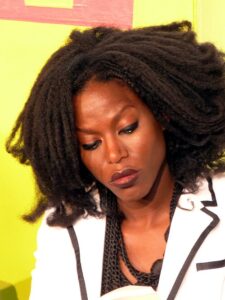
First, I encountered Taiye Selasi. With her 2005 essay ‘Bye-Bye, Babar,’ she introduced the ‘Afropolitan’: a new generation of African global citizens who are cosmopolitan, successful, and trendy. Her description felt like a liberating and glamorous statement. However, it focused on a small elite, and such a life is not attainable for everyone.

Where Do I Go From Here?
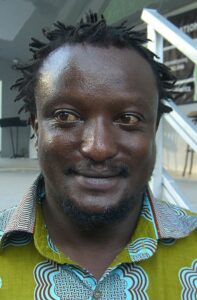

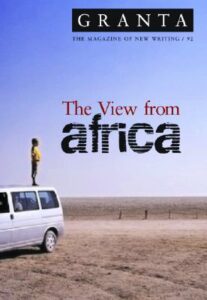

Wainaina was a dedicated Pan-Africanist, but he did not believe in the Pan-Africanism of grand political congresses, intellectual elites, or the rigid borders of heads of state. For him, Pan-Africanism lived on the ground: in the everyday connections between people, in a shared pop culture, resilience, literature, food, and the raw, messy reality of daily life. To let these voices speak for themselves and break away from Western formats, he left behind a trail of groundbreaking publications and initiatives.
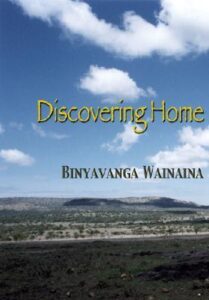
With this short story, he instantly established his name in the international literary world by winning the prestigious Caine Prize for African Writing. However, he absolutely refused to accept this elite institution in London trying to manipulate what ‘good’ or ‘authentic’ African culture should be. He refused to conform to their Western standards and used the prize money to take back control.

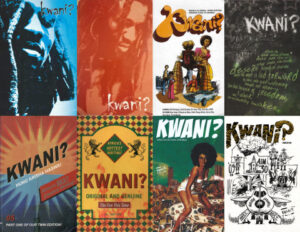
With that won prize money, he founded an iconic literary magazine: ‘Kwani?’, which literally means ‘So what?’. It became the independent platform for a new generation of Kenyan writers to tell their own, uncensored stories, going completely against Western expectations. The magazine was recognized with a Prince Claus Award, a testament to the massive impact made by the Kwani Trust.

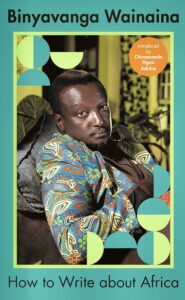

As mentioned above, this is a razor-sharp, satirical essay in which he flawlessly dissects how Western media and writers talk about the continent. He did this with cynical tips, pointing out that African characters are often expected to be colorful or musical, but never modern, complex people. He illustrated this with literal advice such as: ‘Always use the word ‘Africa’ or ‘Darkness’ or ‘Safari’ in your title.’ He showed how Africa is kept trapped in a frame of pure trauma or wilderness.
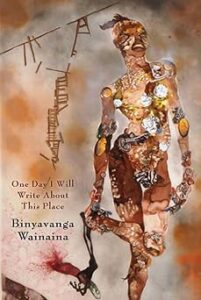

In this autobiography, he describes his own youth and coming-of-age. He grows up in a stable middle-class family in Nakuru, Kenya. His father runs a farming cooperative and his mother (who is from Uganda) owns a hair salon. He describes his childhood as a chaos of bright colors, pop culture, and sounds.
As a young man, he leaves for South Africa to study computer science and business. This fails completely. He falls into a deep depression, spends days in bed, and becomes entirely addicted to reading books. He drops out of his studies to focus fully on writing. After years in South Africa, he returns to a politically turbulent Kenya, where he finally finds his voice as a writer.

Academici often call Wainaina’s generation in this book the ‘IMF generation’ because the African middle class in the 1980s and 1990s suffered heavily under the economic measures imposed by the West (the International Monetary Fund). The book, which perfectly demonstrates how complex and layered an African identity is in reality, was in 2011 named one of the most notable books of the year by The New York Times (you can read their full, paywall-free review here).
2014 – I am a Homosexual, Mum
In the original 2011 version of his memoir, Wainaina wrote almost nothing about his sexuality. But in 2014, as several African countries passed strict anti-homosexuality laws, he decided to come out publicly. He did this by publishing the candid essay ‘I am a Homosexual, Mum’, which he presented as the ‘lost chapter’ of his previous book. This made him one of the most important and courageous LGBTQ+ activists on the continent. He fought against rigid frameworks: against the homophobia within African governments, and he refused to conform to the Western, heteronormative image of the ‘African man.’
What Does the Work of Binyavanga Wainaina Teach Me?
Wainaina’s activism, courage, and his ‘Pan-Africanism from below’ have shaken my own ingrained baby boomer perspective. He forces me to ask myself the uncomfortable question: am I looking at non-Western art because I am truly open to its layers, or am I secretly still searching for the digestible, exotic image that my Western mind is used to? Thanks to Wainaina, I am learning that hybrid looking does not mean I have to ‘understand’ the art according to my own rules, but that I must dare to let go of control and simply allow the raw, complex reality of the maker to exist.


Johanna
P.S.
Photo Taiye Selasi: Manfred Sause / Wikimedia Commons (CC BY-SA 3.0)
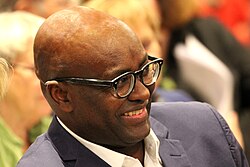
Photo Achille Mbembe: Heike Huslage-Koch / Wikimedia Commons (CC BY-SA 4.0)
Photo Binyavanga Wainaina: Luigi Novi / Wikimedia Commons (CC BY 3.0)
Photo Streetwear scene: Stockcake (Free to use under AI license)


